Caribbean
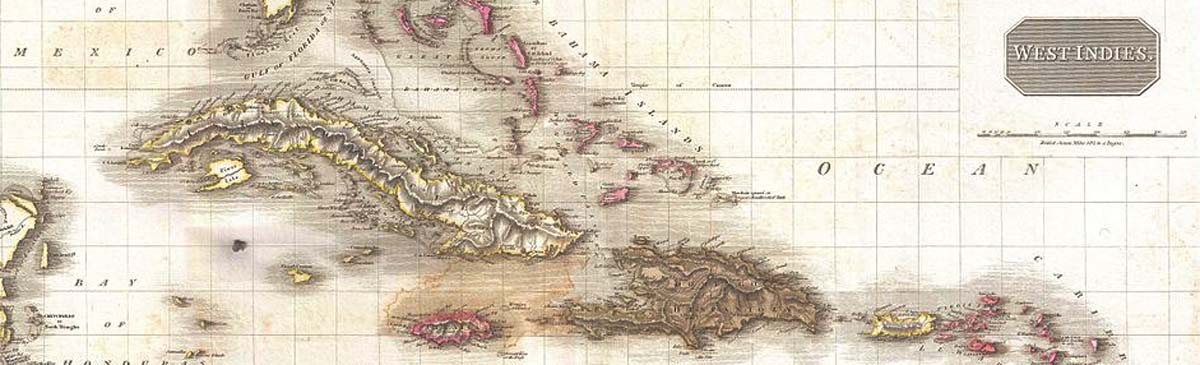
Caribbean Ports: ° Anguilla ° Antigua and Barbuda ° Antilles ° Aruba ° Bahamas ° Barbados ° Cuba ° Dominica ° Dominican Republic (Santo Domingo) ° Grenadines ° Guadeloupe ° Haiti ° Jamaica ° Martinique ° Netherlands/Antilles ° Puerto Rico ° Saint Kitts ° St. Lucia ° St. Martin ° St. Thomas ° St. Vincent and the Grenadines ° Tortola ° Trinidad and Tobago ° Turks and Caicos
Antilles


The island, with its large and protected natural port, was charted before the 16th century and eventually became a major center for mercantile commerce due to its favorable location. Curacao has several superb harbors. These were formed more than 10,000 years ago at the end of the last Ice Age. As the ice melted the hollowed out basins filled with seawater.
The Amerindian Arawaks and their subgroups migrated from regions of South America some 6,000 years ago, settling on various islands the discovered as they embarked on a centuries-long northward trek. The group that ended up in Curacao were the Caiquetios, who gave the island its name.
Curacao owes its maritime prosperity to its favorable location. This is the island where the international trade routes of the Atlantic Ocean meet.
Along the south coast, Curacao has several superb harbors. These were formed more than 10,000 years ago, at the end of the last Ice Age. As the ice melted the hollowed out basins filled with seawater.
Willemstad the capital of Curacao was build around the harbor. The St. Annabay, Schottegat and Waaigat together form an inland water of some four square miles (10km2) with a depth of around 65 feet (20 m). The margin between ebb and flood is just two feet (60 cm). This makes the Curacao harbor an excellent, safe natural harbor.
After the late-15th-century voyages of Christopher Columbus put the Caribbean on the maps, followed by the Spanish soldier and explorer Alonso de Ojeda and the Italian Amerigo Vespucci in 1499 - 1500 to chart much of the South American coast and, in turn, several offshore islands in the area. One was Curacao. Soon after de Ojeda's voyage, the Spanish came in larger numbers.
British Navy Taking Curacao. Napoleonic Wars.

The town that grew between 1676 and 1732 was to remain practically unchanged until 1860. Willemstad's harbor area formed a melting pot of cultures. Seafarers from every corner of the globe gathered here. Crews were paid off after each voyage. It was then up to the men to look after themselves until they could find a new ship. Many seamen lived on Curacao and most were either slaves, freed slaves or mulattos. Curacao became the main base for Dutch privateers. The prosperity of the island owed much to these privateers. Moreover, they provided an essential protection against attacks by enemy privateers. -- Curacao Maritime Museum
By the early 16th century they determined that the island had little gold and insufficient fresh water to establish large farms, and they abandoned it.
However, the Dutch West India Company (WIC) saw Curacao as a potentially valuable base in the Caribbean and on July 29, 1634 the Dutch took over the island. They was little resistance as there were only 32 Spaniards on the island, of which ten were children. Along with most of the Indians, they were deported to the mainland. Under the Dutch West India Company, Curacao became a center of trade. The town was built with a harbor open to all commerce, including private traders. Meanwhile, the WIC also encouraged colonization. When Dutch explorer Peter Stuyvesant became governor in 1642, he established plantations on the island, which foundered in various forms of agriculture, but some were successful in growing peanuts, maize, and fruits.
Chief among its endeavors was the trade of slaves from Africa, who then went on to the other islands of the Dutch West Indies and to the Spanish Main. It was during the slave trade days that the language Papiamentu began to form. The language, a mixture of Portuguese, Spanish, Dutch, and African dialects, became the main form of communication between slaves and their captors.


During the 1640s, Willemstad the capital of Curacao, was built around the harbor. The St. Annabay, Schottegat and Waaigat together form an inland water of some four square miles (10km2) with a depth of around 65 feet (20 m). The margin between ebb and flood is just two feet (60 cm). This makes the Curacao harbor an excellent, safe natural harbor.
Between 1650 and 1670, England was regularly at loggerheads with the Dutch. Curacao's monopoly in the slave trade especially annoyed the English. They commissioned privateers to do their dirty work. Towards the close of the eighteenth century, the French occupied the Dutch Republic in Europe. The French navy was soon using Curacao as a harbor, and the island paid the cost. Moreover, the British, who were at war with France, blockaded the trade of the island.


Also during this time, Jewish families from Amsterdam established settlements on Curacao and attracted others from Europe and South America, fleeing from the remnants of the Spanish and Portuguese Inquisitions. By the early 18th century, the Jewish population in Curacao had reached 2,000 and in 1732, the community established the Mikve Israel Emanuel Synagogue in Willemstad, a structure that stands today. It is one of the oldest synagogues in the Western Hemisphere still in use.
During the early 18th century, the island's deep port and strategic position attracted the British and French who continued their struggles to control the profitable trade routes and sugar plantations of the larger islands.
The 1815 Treaty of Paris settled a lot of disputes in the Caribbean, and it gave Curacao back to the Dutch West India Company. Soon after the Dutch retook the island, it languished for a century. Slavery disappeared, and social and economic conditions were harsh.
Dutch Merchantman. Claude Joseph Vernet

The first Dutch packet line was started in 1825 on the initiative of King William I. Every two months, a Navy ship would sail into Curacao. In 1827-1829, the paddle steamer Curacao was introduced. It was something of a gamble, since steam was still in its infancy. Moreover, the Curacao was a rather small vessel for ocean travel. The Curacao was the first steamship to cross the Atlantic Ocean. It made the voyage in 28 days; sailing ships took forty days to cross.
January 27, 1827, New Times, London, United Kingdom
HAARLEM, JAN. 21. The Burgomaster of Terschelling brought, on the morning of the 19th of this month, to the Nieuw Diep, a letter from Captain Van Dalen, commanding the Waterloo man of war, with a body of troops for the East Indies, which states that the vessel was at anchor off the Isle of Borkum, and that it is entirely dismasted. Capt. Spellard, commanding the Active merchantman, to whom Capt. Van Dalen delivered this letter, affirms that the Waterloo was, otherwise, in good condition. I n the night of the 18th eleven pilot boats were sent from Terschelling, to afford all possible assistance, and the steamboats, the Curacao, and the North Holland, which were in Nieuw Diep, put out for the same purpose. Later accounts say that the two steam-boats had not been able to get to the Waterloo, and that Captain Mugge, commanding a Koff, who, however, continued his route by the canal, said that he had seen, offTerschelling, the Waterloo, lowed by some boats. A niRst, of extraordinary size, h a s been cast on Vlieland ; it is supposed to be that of tho Wasstiuer.
However, after three voyages beset with problems, the experiment was dropped.
Trade stagnated worldwide in the years 1800-1840. South America, where most of Curacao's goods were sold, was in the grip of wars of independence. Willemstad harbor found itself becalmed. In an attempt to attract trade, in 1827 Willemstad was declared a free port, with no taxes or excise. The harbor's fortunes gradually revived in the 1840s. In the 1860s the tide turned. Trade and shipping increased considerably. Shipbuilding flourished between 1840 and 1890. Curacao shipbuilders were especially noted for their schooners. Their size and solid construction made these vessels ideal for the ocean traffic to America and Europe. In the 1890s, Curacao shipbuilders came under increasing pressure from the competition of the cheaper Trinidad and Barbados. The main shipbuilders on Curacao were J.A. Jessurun and S.E.L. Maduro.
September 1, 1861, Daily Alta California, San Francisco, California
The Privateer Sumter.
The Privateer Sumter at Curacoa. Her Reception by the Danish Governor. Statement of Captain Boreham of the Brig Sea Foam.
By the arrival of the brig Sea Foam, Captain Boreham, we have received intelligence and particulars of a visit to the island of Curacoa by the privateer Sumter, whole late piratical exploits have been the theme of much comment. The Sumter arrived off Curacoa on the night of the 17th of July, and fired a gun to attract the attention of the people of the fort. The officials in charge declined to permit the Sumter to enter until the Governor had been consulted, as they did not recognize her national flag. A pilot, however, went on board, and the next morning the Sumter was discovered close to the month of the harbor, with the rebel flag flying at her fore. After some time a boat was lowered from the Sumter, which was rowed to the fort, where an officer disembarked, who was at once conducted to the Governor of the island. The result of the interview which followed was satisfactory to the privateer captain, and on the following morning the Sumter entered and anchored at the harbor, with the rebel flag flying.
 
During the American Revolution and the War of 1812, the Americans faced a British navy with hundreds of ships and tens of thousands of sailors and marines. Lacking time and funds to build an adequate fleet, the American government authorized hundreds of privately armed ships to attack British vessels. These “privateers” captured more than a thousand ships, called “prizes,” and helped the new nation gain and hold independence. |
Captain Boreham, of the Sea Foam, which vessel arrived off Curacoa on the morning of the 17th, some hours previous to the appearance of the Sumter, reports that the Sumter lay in the harbor a whole week, during which time she was supplied with fresh coal, painted and refitted and again put to sea on the 24th, heading eastward. It is gratifying to state that a general feeling among the merchants of Curacoa was against admitting the privateer, and the conduct of the Governor has been much animadverted upon.
The officers of a Dutch man-of-war, at the time lying in the harbor, refused to associate with the privateer officers, and to avoid them went on shore without their uniforms all the time the Sumter remained in the harbor. The proprietor of the principal hotel on the island is an American, whose name we did not learn, who, when it was ascertained that a Southern privateer was entering the harbor, immediately run up the Stars and Stripes, which he kept afloat during its stay. The privateersmen, for a time, refused to enter the hotel under the Stars and Stripes, but the loyal American kept them defiantly waving from his hotel, and they were ultimately forced to patronize the establishment. Captain Simms entered the Sumter as a man-of-war, duly commissioned by his government, which be said was not yet recognized, but would shortly be.
 
|
| An American Two-Masted Privateer during the war between Britain and America |
The officers and men of the Sumternumbered 150. She was armed with four thirty two's and two sixty-four's. Some of the officers wore the United States navy uniform. No provisions were purchased at Curacoa. One of the officers stated, when spoken to on the subject, that they needed no provisions, as they had taken sufficient out of their last prize to serve the men for several weeks. One of the crew deserted the morning of the Sumter's departure, and the Governor lent the aid of the police to capture him, but his hiding place was undiscovered, and he was luckily left behind. As an evidence or bit intention to pay another visit to Curacao, Capt. Simms left directions for the detention of the runaway until he returned. At there is a probability of the Sumter's revisiting the island, there is a chance for some of the United States vessels, now anxiously looking after her whereabouts, to capture her in the neighborhood of Curacao. Captain Boreham did not leave Curacao until after the departure of the Sumter. He had disposed of a cargo of ice previous to the Sumter's arrival an article which the privateersmen expressed themselves much in want of.
In 1882, an Amsterdam, New York and Curacao line was established. Connections with Curacao improved dramatically as Curacao was the first port of call for many European ships crossing the Atlantic.
May 20, 1890, Bismarck Daily Tribune, Bismark, North Dakota, USA
A Curious Drawbridge.
 |
The Queen Emma Pontoon Bridge and Colonial Gabled Buildings. Willemstad, Curacao D. A. Levy, Photographer |
"One of the most curious drawbridges in the world," said an officer of a West India fruit steamer, "is in the harbor called St. Ann's Bay, in the Island of Curacao. It is a pontoon bridge, and one of the pontoons is a steamer. The steamer was built in Camden, Missouri. It is a scow 40 feet long, 12 feet wide and 7 feet deep.
There is a single shaft that runs clear through the boat, and has a 40 inch screw propeller on each end. The shaft is turned by two 9x12 steam engines. When the draw is to be opened, the captain of the steam pontoon casts off the lines, gives a toot on the whistle, and sets the propellers a whirling, and thereupon half the bridge swings round far enough to let the coming ship pass through. Then the wheel is reversed and the gap is closed.
~ Exchange
By 1910 around 25 steamers were entering the harbor each month on regular lines from seven different countries.
By 1920, oil was discovered off the Venezuelan coast. This signaled a new era for Curacao, and for its sister island Aruba.
The island is the birthplace of the famous liqueur, Curacao, perhaps more well known outside of Curacao than the island is.
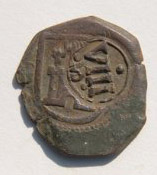
Spanish Pirate Coins
Selections from Ferdinand and Isabella, Colonial Caribbean, King Philip III of Spain, Elizabeth II, Ferdinand IV, King of Castile, and Leon Pepion...

Site Search
The Sugar Barons: Family, Corruption, Empire, and War in the West Indies
Matthew Parker.


The Chinese in the West Indies, 1806-1995: A Documentary History


To Hell or Barbados: The Ethnic Cleansing of Ireland.
Sean O'Callaghan
More than 50,000 Irish men, women and children were transported to Barbados and Virginia. Sean O'Callaghan documents the history of these people: their transportation, the conditions in which they lived on plantations as slaves or servants, and their rebellions in Barbados. An illuminating insight into a painful episode in Irish history, but its significance is much broader than that. Its main achievement is to situate the story of colonialism in Ireland in the much larger context of worldwide European imperialism. O'Callaghan's description of seventeenth century Barbados is a powerful portrait of a society as brutal, corrupt and unjust as anything the twentieth century has to offer. A valuable book.""--Irish World


The Caribbean: A History of the Region and Its Peoples
Stephan Palmie, Francisco A. Scarano, Editors.


A Brief History of the Caribbean: From the Arawak and Carib to the Present






Warships of the World to 1900
Lincoln P. Paine.
True Yankees: The South Seas and the Discovery of American Identity
(Johns Hopkins University Studies in Historical and Political Science)
Dane A. Morrison
Stephan Talty

Navigation Rules and Regulations Handbook
U.S. Coast Guard
The Navigation Rules & Regulations Handbook supersedes Commandant Instruction M16672.2D This edition includes LNM 39-15 and NTM 41-15 33 CFR 83.01(g) requires: "The operator of each self-propelled vessel 12 meters or more in length shall carry, on board and maintain for ready reference, a copy of these Rules."

American Merchant Ships
1850-1900
Frederick C. Matthews


 Copyright ~ 1998-2018.