VIPS in 1800s California
Amasa Leland Stanford
Born: March 9, 1824; Died June 21, 1893 (another record indicates 1895)
Arrived San Francisco on the SS Independence, July 12, 1852
In 1852, having lost his law library and other property by fire, he moved to California and began mining for gold in Placer County. He subsequently went into business in a general store for miners with his three brothers, who had preceded him to the Pacific coast.
He helped organize the Sacramento Library Association, which later became the Sacramento Public Library. In 1856 he moved to San Francisco and engaged in mercantile pursuits on a large scale.


Stanford was one of "The Big Four" railroad magnates, which included the founding of the Central Pacific Railroad Company in 1861. He was actually known as "The Railroad King," and the railroad's first locomotive was named Governor Stanford in his honor. Leland Stanford is known as "The Railroad King."
In 1862-1863 he was the 8th Governor of California, later a Senator, and founder of Leland Stanford Junior University.
As president of the Central Pacific, he directed its construction over the mountains, building 530 miles in 293 days. Stanford hammered in the famous golden spike in Utah on May 10, 1869. In 1870, the Central Pacific Railroad acquired the Southern Pacific Railroad, forming one of the most powerful railroad monopolies in history.


During a trip East and a visit to Harvard University, he dreamed of duplicating Harvard. When he was told that it would cost $15 million to do so, he said "we can do it."
Stanford had participated profitably in each phase of California's development. He philosophized: "With the production of wealth comes the leisure to think, and no people is really great which is not a thinking people."


In 1872 Leland Stanford commissioned to use newly invented photographic technology to establish whether a galloping horse ever has all four feet off the ground simultaneously, which they do. This project, which illustrated motion through a series of still images viewed together, is credited as being an introduction into motion picture technology. Muybridge used the fastest lens' available for his experiment.
(Editor's Note: Corrections made on October 8, 2005 with notes from Norman E. Tutorow, Ph.D., author of The Governor: The Life and Legacy of Leland Stanford, Arthur H. Clark Co., 2004, Spokane.)
June 3, 1886, Daily Alta California, San Francisco, California, U.S.A.
Pacific Cable Railroad Company.
Articles of incorporation were filed yesterday by the Pacific Cable Railroad Company, who propose to acquire, introduce and maintain endless wire cable systems of street railroads, to buy, sell and maintain patent rights on roads already in operation and to acquire such rights in the future. Capital stock, $2,000,000, in $100 shares.
Directors Leland Stanford, A. B. Hallidie, C. F. Crocker, F. F. Low, James Moffitt and J. L. Willcutt.
March 22, 1908, San Francisco Call, San Francisco, California, U.S.A.
SOMETHING WRONG AT STANFORD
STANFORD university in the throes of an emeute of the student body against the authority of the faculty is not an edifying spectacle. There is too much and too frequent trouble at Stanford. Academic liberty has been fettered by scholastic autocrats or circumscribed by personal prejudice. Freedom of speech, even in the exposition of economic or philosophical themes as old as Plato and the Gracchi, Has been persistently and consistently denied; quarrels in the faculty have periodically subjected the university to unnecessary and unpleasant notoriety, and lax discipline or perfunctory surveillance of the habits and conduct of the men students has encouraged the undergraduates to revolt against the authority of the governing body. There is something wrong at Stanford.
The public is inclined to believe that the faculty or the trustees of the institution are largely to blame for the unhappy conditions that prevail there. It is argued that these conditions could not exist if the authority vested in a competent faculty were supreme and unhampered by a superior power, to whose personal opinion and wishes the governing and teaching force is compelled to defer. The result of this divided or suppressed authority is manifest not only in the bickerings of the faculty itself but in the unrest permeating the student body. In this view of the conditions it is not strange that revolts and rebellions similar to that which now disturbs the peace of the campus should too frequently thrust this university into the fierce light that beats upon those who are headlined in the newspapers.
At the state university such outbreaks as are reported from Stanford would be impossible, not necessarily because the governing forces are more competent, but because the authority is more direct and compact. Even politics could not wrench asunder the foundation of the state institution, and personal prejudice, animus or opinion could not stir a single stone of the edifice. The contrast between the two institutions, is sharp; and well defined, and unless there is radical reform at Stanford the Palo Alto establishmeht of which the state has many reasons to be proud; must inevitably suffer loss of prestige and influence whenever a comparison is made. In a university, as in a state, government must be founded in justice and equity; its laws must be enforced with an even and and a stron ghand.
There is something wrong at Stanford. The responsibility rests upon-the trustees to find out what it is and set it right.
The Associates: Four Capitalists Who Created California

A true-life tale of ruthless ambition, staggering greed, and the making of a nation. One hundred forty years ago, four men rose from their position as middle-class merchants in Sacramento, California, to become the force behind the transcontinental railroad. In the course of doing so, they became wealthy beyond any measure and to sustain their power, they lied, bribed, wheedled, and, when necessary, arranged for obstacles, both human and legal, to disappear.


Their names were Collis P. Huntington, Leland Stanford, Charles Crocker, and Mark Hopkins, and they were known as The Big Four or The Associates. Their drive for money nothing more, nothing less was epic.
Their legacy is a university, public gardens, museums, mansions, banks, and libraries and to a large degree California itself, a state that even today owes its aura of can-do and limitless possibilities to The Associates.
A Selection of California History Books, including
 The Annals of San Francisco
Frank Soule, John H. Gihon, James Nisbet

Site Search
Written by noted genealogist and lecturer George G. Morgan. This guide takes you inside the #1 website for family history research. This edition includes chapters on searches at Ancestry, MyCanvas, and Ancestry DNA.
The Governor
The Life and Legacy of Leland Stanford


The Stanford (University) Album:
A Photographic History, 1885-1945


Becoming Stanford: The Making of an American University
(DVD: CustomFlix Studio)

Stanford: The First Hundred Years
Casey Pittock, Brad Geer
VHS Tape
In History's Grip:
Philip Roth's Newark Trilogy
(Stanford Studies in Jewish History)
Michael Kimmage
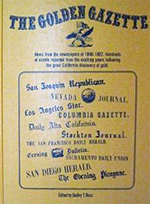
The Golden Gazette:
News From the Newspapers of 1848-1857: Hundreds of Events Reported From The Exciting Years Following the Great California Discovery of Gold
Dudley T. Ross

"The Golden Gazette," turns out to be a fabulous collection of news stories for anyone curious about the quirky and sometimes frightening episodes of San Francisco's early days: hangings (including women), fires, fleeing criminals, notes on theatrical stars, ship wrecks, ads for things like "Oriental Tooth Wash," wheat crops shipping out of Martinez and Benicia, sheep prices, etc. His selection will please anyone wandering and exploring California.


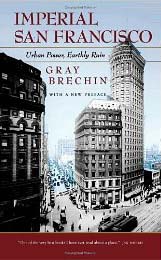
Imperial San Francisco:
Urban Power, Earthly Ruin
(California Studies in
Critical Human Geography)
Gray Brechin

 Copyright ~ 1998-2018.