Maritime Nations
Malay Archipelago (Maritime Southeast Asia): ° Bangladesh ° India ° Indonesia ° Malacca Strait ° Malaysia ° Maldives ° Myanmar (Burma) ° Pakistan ° Philippines ° Riau Islands ° Singapore ° Sri Lanka ° Thailand ° Timor
Sri Lanka


Sri Lanka, is an island country situated between the Bay of Bengal, Gulf of Mannar and Indian Ocean about 20 miles south east of of India. Ceylon is thought to have been initially populated by people migrating from Northern India.
The first Sinhalese arrived in Ceylon late in the 6th century B.C. probably from northern India. Buddhism was introduced about the mid-third century B.C.E. and a great civilization developed at the cities of Anuradhapura (kingdom from circa 200 B.C. to circa A.D. 1000) and Polonnaruwa (from about 1070 to 1200).
Two Monks in Front of Buddha Statue
Gal Vihara, Polonnaruwa
(UNESCO World Heritage Site)
Yadid Levy, Photgrapher


In the 14th century, a south Indian dynasty established a Tamil kingdom in northern Ceylon. The coastal areas of the island were controlled by the Portuguese in the 16th century and by the Dutch in the 17th century. The island was ceded to the British in 1796, became a crown colony in 1802, and was united under British rule by 1815. As Ceylon, it became independent in 1948; its name was changed to Sri Lanka in 1972.
Dutch India Company


Parts of Ceylon were colonized by Portugal in 1505 when the Portuguese took possession (the country's name until 1972 when it was changed to Sri Lanka). The Dutch India Company took control in 1658 before the control of the entire country was ceded to the British Empire in 1815. Then the British took over in 1796 and Ceylon became an English Crown colony in 1802. The British developed coffee, tea, and rubber plantations and Ceylon grew famous for the production and export of tea, coffee, coconuts and rubber.
June 23, 1874, London and China Telegraph
Parliament.
House of Lords
Harbour of Colombo (Loan) Bill.
(June 18th.) The Earl of Carnarvon, in moving the second reading of this Bill, said that as their lordships were aware the steamers for India, China, and Australia all touched at Ceylon.
Sri Lanka. 1897.


The harbour they had hitherto made use of there was that of Galle, and arrangements had been made by his noble friend opposite (the Earl of Kimberley) for the spending of a sum of money in the improvement of that harbour. Since then there had been an inquiry, the result of which was to show that the extent of the harbour of Galle was inadequate, that the currents were dangerous, that there were considerable swells there, and that it was indented with rocks. One of these rocks was only discovered last year. Many wrecks occurred there. Indeed, there was scarcely a year in which there was not at least one. A very experienced captain said that he had never gone into the harbour of Galle without a sense of apprehension, and had never got out 6f it without a sense of relief.
Veddhas Tribesmen, Colombo, Sri Lanka.


Colombo was free from those drawbacks. There were no currents or dangerous swells there, and Colombo was the terminus of a line of railway by which the produce of the island was brought down to the coast. Under these circumstances, it had been thought advisable to make Colombo the harbour of call in lieu of Galle, and the object of this Bill was to transfer to the former the loan made in favour of the latter.
The colony was prepared to spend 600,000 on the harbours, and the Treasury undertook to advance by way of loan a sum of 250,000 at 5 per cent., 3-1/2 of which was to be for interest and the remaining 1-1/2 to form a sinking fund for the repayment of the principal. The security of the island was quite a safe one. The revenues of the island had rapidly advanced during the last three or four years, and there was a considerable balance of receipts over expenditure.
Palmyra Palms, Sri Lanka Beach
Von Konigsbrunn

The Earl of Kimberley entirely concurred with his noble friend in approving the object of the Bill. His noble friend had, however, made a slight mistake in saying that the arrangements for the loan to Galle were made when he was at the Colonial-office. These arrangements had been made before his accession to office. He found that the expenditure would be so large and that the improvement of that harbour was beset with such difficulties, further inquiry was desirable. That inquiry had been made by competent engineers, and the result was a report in favour of the harbour of Colombo. He agreed with his noble friend that the security for the loan was sufficient. The colony was acting with spirit in the matter, and the advance by way of loan from this country was no more than ought to have been expected. The Bill was then read a second time.
February 4, 1893, Colonies and India, London, United Kingdom
An Elephant Kraal in Ceylon.
When the last mail left Ceylon great preparations were being made by Delwala Ratemahatmeya of Kukul Korle, and Rambukpota President, for an elephant kraal in the Kukul Korle, and that wild and isolated Korale was undergoing transformation into a temporary town, in which buildings sprung up like magic, the outcome of a liberal outlay of money.
  Washing an Elephant in the River after a working day.
|
Delwela Ratemahatmeya started a kraal last year, which proved an utter failure, owing to want of provisions for the persons engaged in the operations. Keeping this fact in remembrance, Delwela Ratemahatmeya this year solicited the aid of Rambukpota President, who with his usual liberality responded to the appeal made to him, and undertook to co-operate. As Rambukpota President was not able to proceed to the scene of the kraal himself, owing to official duties, he sent Wannaku Mohatai to look after things. After the completion of the necessary preparations, Iddamalgodda Kumarihamy intended proceeding to the kraal attended by a crowd of attendants.
  Traditional Stilt Fisherman |
March 31, 1894, Colonies and India , London, United Kingdom
Not long ago an incident occurred which reflected anything but credit on the Ceylon tea industry, viz., the condemnation of a consignment of Ceylon tea at Melbourne as being unfit for human food. A repetition of this is now reported, Ceylon tea being again refused entrance through the Customs of one of the southern capitals, on exactly similar grounds.
March 16, 1895, Colonies and India, London, United Kingdom
The Grand Duke and Duchess of Mecklenherg have lately been touring in Ceylon, and have apparently been much interested in that picturesque country. They went up the other day from Colombo to Anuradhapura, where they stopped for some little time, visiting the ruins of the ancient cities. Then they returned to Kandy, and visited Bandarawella, Badulla, and Nuwara Eliya, and subsequently Ratnapura, where they went to see the actual working of the gem pits. From Ratnapura they went down by boat to Kalutara.
  The Temple of the Tooth, Kandy, Ceylon |
The Duke of Mecklenberg is about to build a new palace in his Duchy, and while he was at Kandy he asked Sir Arthur Havelock whether he could have some samples of Ceylon woods. The Governor turned him over to the Forest Department, and he was soon supplied with a large selection of the most suitable woods for building and furnishing purposes.
 
The Sacred Bo-Tree at Anuradhapura |
January 29, 1896, Echo, London, United Kingdom
Dumbula Valley (Ceylon) Tea Company (Limited)
1901. Colombo. Sr. Lanka. Sinhalese British Era.


This company has been formed mainly with the object of tea acquiring, working, and developing tea estates in Ceylon. The directors have arranged for the purchase of six estates, comprising a total area of 2,091 acres, of which 1,835 acres are under tea, 130 acres are available for planting with tea, and the remainder is forest jungle and grassland. The capital is 200,000 in shares of 5 each, and the present issue consists of 150,000 in 10,000 Six per Cent. Cumulative Preference and 20,000 Ordinary Shares. Of this issue 1,000 Preference and 5,200 Ordinary Shares arc to be allotted in part payment of the purchase-money ( 145,200), the remainder being offered for subscription at par.
1899. World's Fleet. Boston Daily Globe
Lloyds Register of Shipping gives the entire fleet of the world as 28,180 steamers and sailing vessels, with a total tonnage of 27,673,628, of which 39 perent are British.
| Great Britain | 10,990 vessels, total tonnage of 10,792,714 |
| United States | 3,010 vessels, total tonnage of 2,405,887 |
| Norway | 2,528 vessels, tonnage of 1,604,230 |
| Germany | 1,676 vessels, with a tonnage of 2,453,334, in which are included her particularly large ships. |
| Sweden | 1,408 vessels with a tonnage of 643, 527 |
| Italy | 1,150 vessels |
| France | 1,182 vessels |
For Historical Comparison
Top 10 Maritime Nations Ranked by Value (2017)
| Country | # of Vessels | Gross Tonnage (m) |
Total Value (USDbn) |
|
|---|---|---|---|---|
| 1 | Greece | 4,453 | 206.47 | $88.0 |
| 2 | Japan | 4,317 | 150.26 | $79.8 |
| 3 | China | 4,938 | 159.71 | $71.7 |
| 4 | USA | 2,399 | 55.92 | $46.5 |
| 5 | Singapore | 2,662 | 64.03 | $41.7 |
| 6 | Norway | 1,668 | 39.68 | $41.1 |
| 7 | Germany | 2,923 | 81.17 | $30.3 |
| 8 | UK | 883 | 28.78 | $24.3 |
| 9 | Denmark | 1,040 | 36.17 | $23.4 |
| 10 | South Korea | 1,484 | 49.88 | $20.1 |
| Total | 26,767 | 87.21 | $466.9 | |

Site Search



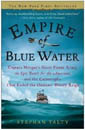
The Struggle for Sea Power: A Naval History of the American Revolution
Author Sam Willis is a maritime historian, archaeologist, and broadcaster. He is the author of a number of books on maritime and naval history, including The Fighting Temeraire: Legend of Trafalgar
and the Fighting Ships


Archaeology of East Asian Shipbuilding
Jun Kimura
“The most comprehensive technical inventory of East Asian shipbuilding and shipwrecks available to date, this detailed analysis refines our understanding of East Asia ship construction.”—Hans Konrad Van Tilburg, author of Chinese Junks on the Pacific: Views from a Different Deck


A Civil War Gunboat in Pacific Waters: Life on Board USS Saginaw
(New Perspectives on Maritime History and Nautical Archaeology)
Hans Konrad van Tilburg


Pirate Nation: Elizabeth I and Her Royal Sea Rovers
David Childs.
For all the romantic mythology surrounding the court of Queen Elizabeth I, the financial underpinning of the reign of 'Gloriana' was decidedly sordid. Elizabeth's policy of seizing foreign assets made her popular at home but drew her into a partnership with pirates who preyed on the state's foes and friends alike, being rewarded or punished depending on how much of a cut the Queen received, rather than the legitimacy of their action. For this reason the rule of law at sea was arbitrary and almost non-existent. Even those, such as the Lord Admiral and the Court of Admiralty, who were tasked with policing the seas and eliminating piracy, managed their own pirate fleets.


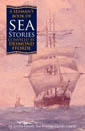
A Seaman's Book of Sea Stories
C. S. Forester

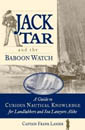

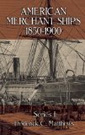
American Merchant Ships
1850-1900
Frederick C. Matthews


The Pursuit of Power: Technology, Armed Force, and Society since A.D. 1000
William H. McNeill.

 Copyright ~ 1998-2018.