United States
Delaware
The Proposed Maryland and Delaware Ship Canal
December 5, 1879, Iron, London, Middlesex, United Kingdom
  |
Virginia, Maryland and Delaware, c. 1823 Henry S. Tanner. |
The route of the proposed Maryland and Delaware Ship Canal is from the Chesapeake Bay at Queenstown, Maryland, across the peninsula to Lewes, the outlet to be five miles above the Delaware Breakwater. The length of the canal by this route will be fiftyone miles. It will be 200 feet wide, 25 feet deep, and capable of accommodating the largest vessels. Its width will enable two of the largest steamships or sailing vessels in tow, going in opposite directions, to pass each other with ease.
The canal is to be free, with no toll charges, and can be used by day or night. It is proposed to have no locks other than tide locks. The report of the- House Committee on Canals and Railways recommends an appropriation of $37,000,000, which is allowing a margin of $6,000,000, as from close calculations and estimates it is believed the canal can be built for $31,000,000. The advantages to foreign commerce are apparent. Vessels bound for any European port north of the Mediterranean could by using the canal, save 225 miles, which would, otherwise be consumed in sailing down the Chesapeake Bay and around the capes, This would make the. trips of the regular foreign lines of steamships from one to two days shorter, and would in, a similar way expedite irregular steamship traffic and sailing vessels.
May 6, 1880, Chester Daily Times, Chester, Pennsylvania, U.S.A.
The Launch at Roachs
  |
Indian Summer The Delaware River Jasper Francis Cropsey |
--The new iron steamer, which has been building at the yard of the Delaware River Iron Ship Building and Engine Works, for about three months, for the Old Dominion Steamship Company, was successfully launched from her ways, in the yard, this morning at 10:35 o'clock. The attendance on the part of our citizens was not so large as upon previous occasions. After everything was ready and she was sawed off, she glided down the cradle most beautifully amid rousing cheers. She was christened in a very graceful manner, the "Breakwater," by Miss Katie Jackson, of Germantown, and as she dropped into the water her fine line and beautiful proportions were the admiration of all beholders.
The vessel is 800 feet over the load line, 223 feet over all, 30 feet beam, 21 feet depth of bold, and 1200 tons register. She has a single duplex acting surface condensing engine, thirty-six inches by forty-eight stroke, and her boilers are two in number, fifty feet long by ten feet in diameter. The propeller is of the Hirsch patent, eleven feet three inches in diameter, and is calculated to make about sixty-five revolutions per minute. The ship will draw about twelve feet of water, and will make about fourteen knots per hour. There are two decks, and she will be schooner rigged, and when under full sail she will spread about 12,000 square yards of canvas. The hoisting apparatus is of the most approved kind, worked by steam, as is also the steering arrangements.
Her saloons will be finished in choice, hard woods, and she will have twenty-three state rooms, most elegantly furnished, which will afford accommodations for forty-five first-class passengers, besides the officers and crew. She is intended for the trade between New York and Lewes, Del., connecting at the latter place by rail with the entire peninsula and Maryland. The vessel has very fine lines and ample power, and is expected to make the trip between New York and Lewes in ten hours. She will be completed by the first of June, in time to market the small fruits from Delaware. She is a model of beauty, and a credit to her builders and owners.


Delaware has a long history of "firsts," innovations, and improvements in lighthouse construction and technology dating from the beginning of lighthouse history in the United States. One of the original six lighthouses built before the founding of this country was in Delaware.
In the following years, major offshore lighthouses and an extensive system of range lights were established. At the height of its lighthouse history, Delaware had 27 manned light stations that warned mariners of the shoals and colliding currents at the mouth of the Delaware Bay and guided ships safely from the Atlantic Ocean to the inland ports of Wilmington and Philadelphia. Most of Delaware''s lighthouses are gone now, preserved only in faded photographs and yellowed documents such as those collected here.
Lumber was often loaded through bow ports, openings cut in the hull to make loading easier. The bow ports were closed when the loading was done, caulked tight around the edges, and reinforced, before the vessel sailed away.
In Plymouth, manufacturing gradually replaced shipping in importance. Until the late 1890s, incoming vessels continued to bring large cargoes of raw materials: among them sisal and hemp for the ropewalks, coal for the iron works.
The American Clyde: A History of Iron and Steel Shipbuilding on the Delaware, 1840 to World War I.
David B. Tyler


National and New England
(1600-1825)
Carl Boyer


Larry Lowenthal
In photographs and paintings the Delaware & Hudson Canal appears calm and unrufffled. The charming picture is not entirely false, but there is another dimension to the D&H Company, a corporation struggling to succeed in a hostile and risky business. Except in its final years the history of the canal was marked by a series of crises or conflicts, each of which threatened the survival of the company. As the company met its challenges in the formative years of American capitalism, it created a model for later enterprises.

History of Delaware
John A. Munroe
Professor of History
University of Delaware

Maritime History: Fiction and Non-Fiction



- The History of Seafaring, Donald Johnson and Juha Nurminen
- Six Frigates: The Epic History of the Founding of the U.S. Navy, Ian W. Toll
- Maritime History as World History, Daniel Finamore
- Sailing into the Abyss, William R. Benedetto
- America and the Sea: A Maritime History, Benjamin Labaree, William M. Fowler, Jr., Edward W. Sloan and John B. Hattendorf
- Stockwin's Maritime Miscellany
- Maritime Southeast Asia to 1500, Lynda Norene Shaffer and Kevin Reilly
- A History of Arctic Exploration: Discovery, Adventure and Endurance at the Top of the World by Juha Nurminen and Matti Lainema
- We Were Not the Savages: First Nations History - Collision Between European and Native American Civilizations, Daniel N. Paul
- Tobacco Coast: A Maritime History of Chesapeake Bay in the Coloniel Era, Arthur Pierce Middleton
- Stories from the Maine Coast: Skippers, Stips and Storms, Harry Gratwick
- Maritime Supremacy and the Opening of the Western Mind: Naval Campaigns that Shaped the Modern World, Peter Padfield
- Beyond the Blue Horizon: How the Earliest Mariners Unlocked the Secrets of the Oceans, Brian M.Fagan
- A Brief History of Fighting Ships, David Tudor Davies
- The Riddle of the Compass: The Invention that Changed the World, Amir D. Aczel

Site Search


Warships of the World to 1900
Lincoln P. Paine.
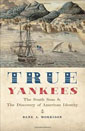
True Yankees: The South Seas and the Discovery of American Identity
(Johns Hopkins University Studies in Historical and Political Science)
Dane A. Morrison
Stephan Talty

Navigation Rules and Regulations Handbook
U.S. Coast Guard
The Navigation Rules & Regulations Handbook supersedes Commandant Instruction M16672.2D This edition includes LNM 39-15 and NTM 41-15 33 CFR 83.01(g) requires: "The operator of each self-propelled vessel 12 meters or more in length shall carry, on board and maintain for ready reference, a copy of these Rules."

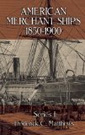
American Merchant Ships
1850-1900
Frederick C. Matthews


 Copyright ~ 1998-2018.