South Atlantic Ocean
South Georgia and the South Sandwich Islands
Captain James Cook, on his search for a rumored southern continent, discovered the uninhabited islands in 1775. Confronted by "Thick fogs, Snow storms, Intense Cold and every other thing that can render Navigation dangerous," he quickly tired of the region and left the South Sandwich Islands behind, but not before claiming them for Britain.
Captain Cook. Map 1808.


South Sandwich Islands, group of actively volcanic islets in the South Atlantic Ocean, north of the Weddell Sea and 470 miles (760 km) southeast of the island of South Georgia. They extend for 190 miles (305 km), occupy 120 square miles (310 square km), and are covered with glaciers.
Louis Charles de Saulces de Freycinet.


Castaways, survivors of shipwrecks, and explorers were early visitors to the islands. Darwin was in the Falklands in 1833 and 1834. The British ship Isabella enroute from Australia to england, wrecked there followed by French explorer Louis de Freycinet's shipwreck of the l'Uranie in 1820.
Until 1985 they were included within the Falkland Islands (Islas Malvinas) as a British dependency; thereafter they formed (with South Georgia) a British overseas territory, though their administration was still based in the Falklands.
Captain James Cook. Nathaniel Dance-Holland.

In 1775 the British explorer Capt. James Cook sighted the uninhabited islands and claimed them for Britain; they were also claimed by Argentina after 1948.
The islands remained without a permanent population until 1976, when Argentine military personnel, despite protests from the British government, occupied the Southern Thule group of islands. British forces removed the Argentine personnel in June 1982 during the brief Falkland Islands War. Argentina, however, continued to claim the islands.
In 1993 the British government extended the territory's exclusive fishing zone from 12 to 200 nautical miles (22 to 370 km).
 
|
| John Eastcott and Yva Momatiuk |
1899. World's Fleet. Boston Daily Globe
Lloyds Register of Shipping gives the entire fleet of the world as 28,180 steamers and sailing vessels, with a total tonnage of 27,673,628, of which 39 perent are British.
| Great Britain | 10,990 vessels, total tonnage of 10,792,714 |
| United States | 3,010 vessels, total tonnage of 2,405,887 |
| Norway | 2,528 vessels, tonnage of 1,604,230 |
| Germany | 1,676 vessels, with a tonnage of 2,453,334, in which are included her particularly large ships. |
| Sweden | 1,408 vessels with a tonnage of 643, 527 |
| Italy | 1,150 vessels |
| France | 1,182 vessels |
For Historical Comparison
Top 10 Maritime Nations Ranked by Value (2017)
| Country | # of Vessels | Gross Tonnage (m) |
Total Value (USDbn) |
|
|---|---|---|---|---|
| 1 | Greece | 4,453 | 206.47 | $88.0 |
| 2 | Japan | 4,317 | 150.26 | $79.8 |
| 3 | China | 4,938 | 159.71 | $71.7 |
| 4 | USA | 2,399 | 55.92 | $46.5 |
| 5 | Singapore | 2,662 | 64.03 | $41.7 |
| 6 | Norway | 1,668 | 39.68 | $41.1 |
| 7 | Germany | 2,923 | 81.17 | $30.3 |
| 8 | UK | 883 | 28.78 | $24.3 |
| 9 | Denmark | 1,040 | 36.17 | $23.4 |
| 10 | South Korea | 1,484 | 49.88 | $20.1 |
| Total | 26,767 | 87.21 | $466.9 | |

Site Search
Souvenirs: 1848-1878
French Edition




Warships of the World to 1900
Lincoln P. Paine.
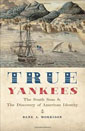
True Yankees: The South Seas and the Discovery of American Identity
(Johns Hopkins University Studies in Historical and Political Science)
Dane A. Morrison
Stephan Talty

Navigation Rules and Regulations Handbook
U.S. Coast Guard
The Navigation Rules & Regulations Handbook supersedes Commandant Instruction M16672.2D This edition includes LNM 39-15 and NTM 41-15 33 CFR 83.01(g) requires: "The operator of each self-propelled vessel 12 meters or more in length shall carry, on board and maintain for ready reference, a copy of these Rules."

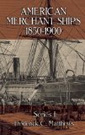
American Merchant Ships
1850-1900
Frederick C. Matthews


 Copyright ~ 1998-2018.