Falkland Islands
International Harbors
The Falkland Islands are a group of about 200 islands300 miles east of Argentina with a land mass of approximately 4,700 square miles. The two main islands are East Falkand and West Falkland, named the Falklands by English captain John Strong in 1690 after the British naval officer Viscount Falkland. Although the islands apparently had been sighted earlier, Captain Strong made the first recorded landing on the islands.
 
Falkland Islands and Patagonia. Cape Horn. Tierra del Fuego. Tallis/Rapkin. 1849 |
The Falklands include the British territories of South Georgia, the South Sandwich Islands, and the Shag and Clerke rocks.
When the French first occupied the islands in 1764 at Port Louis in East Falkland, they were uninhabited, so they are considered to have no indigenous culture.
The islands were quickly ceded to Spain, which then ruled the adjacent territory in Latin America. However, the Spanish only established themselves on West Falkland.
Due to their locations, the Falkland Islands were used as a base for sealers and whaling ships hunting the Southern Right Whale and Sperm Whale. Between 40 and 50 British and American sealers often were in port; their numbers generally outnumered any permanent residents. In 1770s until British authority was established over the islandsand surrounding seas and the whaling was moved from the islands.
By 1816, due to the islands’ inclement climate and strategic uselessness, both powers had removed their respective garrisons and the Falkland Islands had no permanent inhabitants, althogh Spain, France, Britain and the Argentinian governments all at various times attempted to claim the islands.
A vessel from newly independent Argentina was sent in 1820, to establish a permanent settlement but was driven out by a British expedition in 1832. The British declared full sovereignty over the Falkland Islands the following year; Argentina never recognized British sovereignty.
During the 1800s a British community of about 1800 people lived on the island; sheep ranching began to grow and the island exports became wool, hides and meat.
Colonial Gazette, August 17, 1844, London, Middlesex, United Kingdom
The Falkland Islands
The King Penguin (Aptenodytes Patagonicus)


The following has been received at Lloyd's: -- "Downing street, August 9. -- Sir, I am directed by Lord Stanley to inform you, that in consequence of the superior advantages of Port William, in the Falkland Isalnds, over Port Louis, the Governor has been authorised to remove the site of the principal town, which had been originally fixed at the latter, to Port William. By a despatch recently receivd, it appears that the removal has been effected, and that the Governor expected to be able to transfer his residence to Port William before the 30th of June last.
(Signed) W. G. Hope, Mr. W. Dobson, Secretary, Lloyd's.
July 26, 1869, Daily Alta California, San Francisco, California, U.S.A.
SURVIVORS OF THE "BLUE JACKET" FOUND AT
FALKLAND ISLANDS.
From the report of the Britith barque Optima, Captain Gould, which arrived yesterday from London, having made the passage in 174 days, it appears that on 28th of April she was compelled to put into the Falkland Islands for water. There the Captain found twelve of the crew of the British barque Blue Jacket, which was reported burned at sea in March last, while on her way from New Zealand to London. It was also reported to the Captain that the party had with them several boxes of gold, but he did not ascertain whether they had been picked up at sea or had reached the inlands in a small boat.
The loss of the Blue Jacket was reported in the telegraphic news of the Alta of the 22d instant, in the way of a despatch, dated Madrid, July 20th, saying that mail advices from England gave account of the burning at sea of the ship Blue Jacket, and that out of sixty-nine persons on board but eight were saved.
The British declared the islands a colony in 1892.
1899. World's Fleet. Boston Daily Globe
Lloyds Register of Shipping gives the entire fleet of the world as 28,180 steamers and sailing vessels, with a total tonnage of 27,673,628, of which 39 perent are British.
| Great Britain | 10,990 vessels, total tonnage of 10,792,714 |
| United States | 3,010 vessels, total tonnage of 2,405,887 |
| Norway | 2,528 vessels, tonnage of 1,604,230 |
| Germany | 1,676 vessels, with a tonnage of 2,453,334, in which are included her particularly large ships. |
| Sweden | 1,408 vessels with a tonnage of 643, 527 |
| Italy | 1,150 vessels |
| France | 1,182 vessels |
For Historical Comparison
Top 10 Maritime Nations Ranked by Value (2017)
| Country | # of Vessels | Gross Tonnage (m) |
Total Value (USDbn) |
|
|---|---|---|---|---|
| 1 | Greece | 4,453 | 206.47 | $88.0 |
| 2 | Japan | 4,317 | 150.26 | $79.8 |
| 3 | China | 4,938 | 159.71 | $71.7 |
| 4 | USA | 2,399 | 55.92 | $46.5 |
| 5 | Singapore | 2,662 | 64.03 | $41.7 |
| 6 | Norway | 1,668 | 39.68 | $41.1 |
| 7 | Germany | 2,923 | 81.17 | $30.3 |
| 8 | UK | 883 | 28.78 | $24.3 |
| 9 | Denmark | 1,040 | 36.17 | $23.4 |
| 10 | South Korea | 1,484 | 49.88 | $20.1 |
| Total | 26,767 | 87.21 | $466.9 | |

Site Search
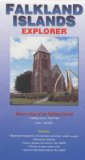
Falkland Islands Explorer Map
Nigel Sitwell
Ocean Explorer Travel Maps were initially produced to meet the needs of passengers on cruise ships, but with their illustrated biographies, historical timelines, detailed photos and information on local wildlife, landscape and native people, the maps will benefit those exploring these areas in other ways.
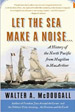
Let the Sea Make a Noise:
A History of the North Pacific from Magellan to MacArthur
Walter A. McDougall
Pultizer Price winning author of "the Heavens and the Earth" depicts four centuries of voyages of discovery, pioneering feats, engineering marvels, political plots, racial clashes and brutal wars.


Falkland Islands
Background, Geography, Natural resources, Land use, Environment, Maritime claims, Volcanism, Country comparison to the world, religions, Languages, Administrative divisions, and almost everthing related with general knowledge.


 Copyright ~ 1998-2018.