South America
Peru


After years of preliminary exploration and military skirmishes, 168 Spanish soldiers under Francisco Pizarro and their native allies captured the Sapa Inca Atahualpa in the 1532 Battle of Cajamarca. Once Atahualpa was captured, the Spanish forced him to pay a ransom of tons of gold and silver. Although Atahualpa produced the ransom, the Spanish executed him anyway.
Francisco Pizarro was a seasoned soldier and conquistador who had played a large role in the conquest and exploration of Panama.
Pizarro was already a wealthy man in the New World, but he believed that there was a rich native kingdom somewhere in South America just waiting to be plundered. He organized three expeditions along the Pacific coast of South America between 1525 and 1530. On his second expedition he met with representatives of the Inca Empire. On the third journey, he followed tales of great wealth inland, eventually making his way to the town of Cajamarca in November of 1532.
Pizarro Seizing the Inca of Peru.


The Inca soldiers and noblemen were taken completely by surprise. The Spanish had several military advantages which were unknown in the Andes. The natives had never seen horses before and were unprepared to resist mounted foes. Spanish armor made them nearly invulnerable to native weapons; their steel swords hacked easily through native armor. Cannon and muskets, fired from the rooftops, rained thunder and death down into the square. The Spanish fought for two hours, massacring thousands of natives, including many important members of the Inca nobility. Horsemen rode down fleeing natives in the fields around Cajamarca. No Spaniard was killed in the attack and Emperor Atahulpa was captured.


It was the first step in a long campaign that took decades of fighting but ended in Spanish rule in 1572 with colonization of the region as a Viceroyalty of Peru.
Spanish conquistadors failed to appreciate the value of Alpaca fibre preferring the wool of the merino sheep from their native Spain, thus Alpaca fibre was a well kept secret for a time.
However, beginning in the mid 1800's, Alpaca was rediscovered by Sir Sirus Salt of Bradford, England. The newly industrialized English textile industry was at its zenith when Sir Titus Salt began studying the unique properties of Alpaca fleece. He discovered that alpaca fibre was stronger than sheep wool and that its strength did not diminish with fineness of staple. The Alpaca textiles he fashioned from the raw fleece were soft and lustrous and quickly made their mark across Europe. Compared to the numbers in their native South America, the number of Alpaca in other countries are somewhat nominal. Some references indicate over 80 percent of the global population is found in Peru. Other smaller groups are on Bolivia and Chile. Very small groups (5% of the total) are found on North America, Australia, Europe, New Zealand, Japan and China.
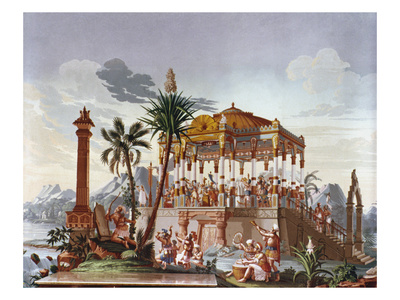 |
Inca Indigenous People |
December 4, 1890, Logansport Journal, Logansport, Indiana
Found in the Ances.
Three Animals of Great Value to the Peruvians.
Llama, the Alpaca and the Vicuna Serving as Beasts of Burden
Articles of Clothing Made from Their Coats.
In the high, cold table-lands of South America, where nature has taken grand shapes, on the bare, bleak Punas, almost as desolate as Sahara or the lofty plains of Tartary, there are, says the St. Louis Globe-Democrat, animals the congener of those peculiar to the last named regions. Instead of the camel in his numerous varieties, there are the llama and his affiliations, similar but distinct, and fulfilling corresponding functions. Among the lofty Andes, too, there is, on a scale of size relative to that which exists between the Andes and the Alps, the great bird, the condor, the Amerindian counterpart of the Swiss lammergeyer . . .
Guanaco, or Wild Llama


The alpaca is a source of real wealth to Peru, and its export has been forbidden, notwithstanding that all attempts to acclimatize it in other countries and climes have proved signal failures . . . The legs of the alpaca are covered down, or nearly down, to its feet by wool, or fleece, while the legs of all its relations, like those of the deer, are clean, covered with short hair, giving them a lighter and fleeter appearance . . .


The vicuna may be tamed, but has never been domesticated--a result often sought as his fleece is remarkably fine and silky, in these respects surpassing that of the alpaca.
Many of the vicunas are killed annually for their fleece, of which hats and ponchos of great softness and beauty are manufactured and sold at high prices to the traveler and haciendero. The royal robes of the Inca were made of the fleece of the vicuna, but the ancients were wiser than their successors. They instituted grand hunts of the vicuna, caught and sheared them, and let them go to reproduce their precious coat.
Callao
Francisco Pizarro founded the Port of Callao in 1537, and it was soon Spain's main Pacific port in the New World. At the peak of Spain's power in Peru, the Port of Callao was the shipment point for goods from Peru, Bolivia, and Argentina to go to Panama and then to Spain through Cuba. Much of the cargo transported out of the Port of Callao was gold and silver that the Spanish conquistadores took from the Inca Empire. The Port of Callao was attacked often by pirates and Spain's European rivals. Sir Francis Drake pillaged the city in 1578.
In 1746, a tidal wave destroyed the Port of Callao after a serious earthquake. Rebuilt about a kilometer from the original site, the new Port of Callao was fortified by the Real Felipe fortress that ended up defending the Peruvians from Spain during the wars of independence. In 1823, Simon Bolivar arrived at the Port of Callao. Three years later, Spain surrendered at the Real Felipe fortress in the Port of Callao. During the period of the Peru-Bolivian Confederacy, the Callao Province was created with relative political autonomy.
On June 4, 1833, the clipper ship Ann McKim was launched. She was built in Baltimore by Kennard & Williamson of Fell's Point for the wealthy sea-dog and merchant, the Honorable Isaac McKim. With a measurement of 143 feet in length, she was easily the largest merchantman of her day, and, with a complete disregard for the expense of her building, she was by far the handsomest. Her beam was 31 feet, her mean depth 14 feet, and her registered tonnage 493.


She mounted twelve brass guns, guns being a feature of all merchant vessels in those days for protection against pirates and marauders in foreign waters. With her lower masts fitted into place, the standing rigging attached, and topgallant masts raised at the top and flag-bedecked, she was launched at 4:30 o'clock on the afternoon of June 4, 1833, and named in honor of the owner's wife.
During the ensuing months the Ann McKim busied herself taking in a cargo of that particular brand of southern flour which does not sour on a trip across the Equator, and, having everything in readiness by the 30th of August made sail and set out, under the command of Captain Walker, for the first lap in the long voyage around the Horn to Peru.


Since the earthquake that Peru suffered in 1678 had made a huge portion of her soil incapable of producing wheat rusting the grain as soon as the head began to form and since Chile, the chief source of Peru's agricultural products, suffered from frequent droughts (the land around Coquimbo, for instance, was barren from 1830 to 1833, the McKim was certain of a ready market for her cargo. She arrived at Callao welcomed by clouds of gulls and pelicans, in a harbor which affords one of the safest anchorages in the world on December 3, after a passage of 95 days, and soon was disposing of part of her 3,500 barrels of flour.
The history of Callao has not been a happy one, nor was her appearance, at that time, as seen from the harbor, other than chill and desolating. Standing on deck of the Ann McKim on any of those clear, dry December days, one would have seen only a weary stretch of sandy plain, dotted by a few low dwellings that served to mark the attempts of the inhabitants to rebuild the city upon a ruin. Between October 28, 1746, and February 16, 1747, Callao was thrown into a mad and reeling state of terror, the city being ripped from end to end during that period by no fewer than four hundred and thirty earthquake shocks, followed by mountain-high inundations from the sea crushing in like solid, rolling walls. Of 4,800 inhabitants, 4,600 were either swallowed by the earth or thrown back by the sea in tangled heaps of dead; the buildings disappeared as if a giant hand had tucked them into a large brown envelope; and practically all shipping in the harbor was destroyed, as vessels rode the water high over the city and were tossed in splintered bundles on the road to Lima.
Callao was again in ruins after the more recent revolution, from which Peru emerged independent of the restrictions and extortions of the civil and ecclesiastical rule of Spain. In 1833, when the steamship Ann McKim lay in the harbor, the nearby protecting presence of the U. S. schooner Dolphin, Lieutenant-Commander Vorheese, was a gentle reminder of Callao's still unsettled state. Prospects for legitimate trade were, however, far brighter than they had been in the days when American vessels were forced to steal into all Peruvian and Chilean ports, carry on their profitable but surreptitious trade with the inhabitants, and trust to their ships' agility to reach the high seas without encountering red death from the sides of a lurking Spanish man-of-war.
The McKim remained on the South American coast for many months, and it was not until the following April that she tripped her anchors and stood out to sea from the roadstead of Huascho. She winged her way, in a 72-day passage to Cape Henry, where she took her pilot on board and entered Chesapeake Bay.
Callao after the fire of August 15, 1868.


In 1857, the Port of Callao was entitled a "Constitutional Province." The name had no real value, except it was the only province in Peru to be given that status under constitutional mandate.
The Port of Callao was bombed by the Spanish fleet in the 1866 Battle of Callao when the Spanish attempted to re-conquer Peru. In 1881, Chilean forces occupied the Port of Callao during the War of the Pacific. It was returned to Peru under the terms of the 1883 Treaty of Ancon.
Iquitos
Iquitos is the largest city in the world not connected to the outside world by roads. The Belen district of Iquitos is called "The Floating City." During the rainy season, its streets are flooded and it becomes the "Venice of South America," when people travel by boat.
Iquitos, located on the Amazon River in northeastern Peru, was originally one of the numerous Indian settlements organized by the Jesuit missionaries in the 16th century, and was known as San Pablo de Napeanos. Its population dispersed, but a community was re-established around 1760. Since the majority of the population were Iquitos Indians it became known as the village of Iquitos. In 1864, three years after President Ram n Castilla had established the Departamento de Loreto (State of Loreto) port facilities were built and this is generally considered as the founding date of Iquitos. Iquitos is the furthest inland deep-water port in the world and receives ships coming up 2300 miles from the mouth of the Amazon on the Atlantic Ocean.
At the end of the nineteenth century Iquitos, along with Manaus, Brazil, prospered greatly from the exportation of rubber.
Lima
Lima was already a sophisticated and developed city when Pizarro founded it in 1535.
Lima Main Square. Johann Moritz Rugendas.


Several native kingdoms ruled by the Incan Empire existed before the arrival of the Spaniards. The most important archaeological remnant corresponds to one of the major shrines and oracles of the Incans’ Empire. When the city was founded, Lima was appointed the capital of the Spanish colonies. Thus, it became the residence of many wealthy families during the colonial period.
July 7, 1894, Centralia Enterprise and Tribune, Centralia, Wisconsin
WILL ARREST ALL REBELS
The Peruvian Government Adopts
Strict Measures With Insurgents
Buenos Ayres, June 28,--A dispatch from Lima, Peru, says that the Peruvian government has ordered a general arrest of the supporters of the revolution. It is added that Great Britain has officially recognized President (Justiniano) Borgono's government.
  Capture of a Spanish Treasure Galleon by three English vessels off the coast of Peru. Capture of a Spanish Treasure Galleon by three English vessels off the coast of Peru.
|
Vicuna (Peru)
Peru selected a relative of the llama, the vicuña (Vicugna vicugna), as its national animal, which appears on the country’s coat of arms.
VICUNA SKINS WORTH $80,000 FOR THE POPE


January 8, 1914, Los Angeles Herald, Los Angeles, California: Mgr. Adolfo Vattuone, who has been traveling In Peru and Ecuador with Giovanni Patrick who belongs to a wealthy Roman family, sailed for Italy on the liner America with about 200 vicuna skins that will be presented to the pope and sold for charity. Mgr. Vattuone says the skins are worth $80.000.
The vicuña lives in alpine heights of the Andes, and, sadly, its luxuriously soft wool has been prized by Inca royalty, Spanish kings and other "royalty," and Hollywood elite.
1899. World's Fleet. Boston Daily Globe
Lloyds Register of Shipping gives the entire fleet of the world as 28,180 steamers and sailing vessels, with a total tonnage of 27,673,628, of which 39 perent are British.
| Great Britain | 10,990 vessels, total tonnage of 10,792,714 |
| United States | 3,010 vessels, total tonnage of 2,405,887 |
| Norway | 2,528 vessels, tonnage of 1,604,230 |
| Germany | 1,676 vessels, with a tonnage of 2,453,334, in which are included her particularly large ships. |
| Sweden | 1,408 vessels with a tonnage of 643, 527 |
| Italy | 1,150 vessels |
| France | 1,182 vessels |
For Historical Comparison
Top 10 Maritime Nations Ranked by Value (2017)
| Country | # of Vessels | Gross Tonnage (m) |
Total Value (USDbn) |
|
|---|---|---|---|---|
| 1 | Greece | 4,453 | 206.47 | $88.0 |
| 2 | Japan | 4,317 | 150.26 | $79.8 |
| 3 | China | 4,938 | 159.71 | $71.7 |
| 4 | USA | 2,399 | 55.92 | $46.5 |
| 5 | Singapore | 2,662 | 64.03 | $41.7 |
| 6 | Norway | 1,668 | 39.68 | $41.1 |
| 7 | Germany | 2,923 | 81.17 | $30.3 |
| 8 | UK | 883 | 28.78 | $24.3 |
| 9 | Denmark | 1,040 | 36.17 | $23.4 |
| 10 | South Korea | 1,484 | 49.88 | $20.1 |
| Total | 26,767 | 87.21 | $466.9 | |

Site Search
River of Darkness: Francisco Orellana's Legendary Voyage of Death and Discovery Down the Amazon
Buddy Levy
n 1541, the brutal conquistador Gonzalo Pizarro and his well-born lieutenant Francisco Orellana set off from Quito in search of La Canela, South America s rumored Land of Cinnamon, and the fabled El Dorado, the golden man. Driving an enormous retinue of mercenaries, enslaved natives, horses, hunting dogs, and other animals across the Andes, they watched their proud expedition begin to disintegrate even before they descended into the nightmarish jungle, following the course of a powerful river. Soon hopelessly lost in the swampy labyrinth, their numbers diminishing daily through disease, starvation, and Indian attacks, Pizarro and Orellana made a fateful decision to separate. While Pizarro eventually returned home barefoot and in rags, Orellana and fifty-seven men, in a few fragile craft, continued downriver into the unknown reaches of the mighty Amazon, serenaded by native war drums and the eerie cries of exotic predators. Theirs would be the greater glory.


Ploughing the South Sea:
A History of Merchant Shipping on the West Coast of South America
E. John McGarry

Rivers of Gold, Lives of Bondage: Governing through Slavery in Colonial Quito
Sherwin K. Bryant.


Inca Gold:
History, Conquest & Legend
Steven J. Charbonneau


Incas: Lords of Gold and Glory (Lost Civilizations)

The Miraculous Lie, Lope De Aguirre and the Search for El Dorado in the Latin American Historical Novel
Bart L. Lewis
A critical study of five twentieth century Latin American historical novels, published between 1947 and 1986, whose theme is the most infamous of all searches for the fabled and elusive kingdom of El Dorado. This doomed expedition was undertaken by Pedro Ursua for Philip II in 1559, and featured as chief protagonist the charismatic "caudillo" and the first colonial rebel against the Spanish crown, Lope de Aguirre.



 Copyright ~ 1998-2018.