Portugal
PORTUGAL: ° Aveiro ° Azores ° Leisues ° Lisboa (Lisbon)
° Madeira Islands ° Ponta ° Porto (Oporto)
° Ponta Delgada ° Portimao ° Setubal ° Sines
International Harbors
Portugal, having a long shoreline with many harbours and rivers flowing westward to the ocean, has the ideal setting for raising adventurous seamen.
Partie Septentrionale du Royaume de Portugal. Porto. De Vaugondy. c. 1750.


Portugal was a global maritime power during the 15th and 16th centuries, however, the Portuguese regime was weakened by a struggle for the succession to the throne and the legacy of a disastrous "crusade" against the Moors. Philip II of Spain (who had a claim to the Portuguese crown) invaded. Spanish rule lasted just 60 years until 1640, when the Portuguese launched a successful uprising and seceded from Spain.
By the time they recovered their independence the Portuguese had lost the bulk of their empire, including most of the valuable East Indies territories which had been occupied by the Dutch, followed by the destruction of Lisbon in a 1755 earthquake and occupation by Napoleon's troops during the Napoleonic Wars in 1807.


Trade choices were to travel overland — crossing lands occupied by Castilians and Aragons — or travelling by sea.
Grain was imported from Morocco while specialised crops occupied former grain-growing areas: vineyards, olives, or the sugar factories of the Algarve, later to be reproduced in Brazil.
Spain and Portugal. 1825.
Arrowsmith, Mapmaker.

The Portuguese government impelled this even further by taking full advantage of this and by creating several important research centres in Portugal, among them was the Institute of Sagres, where Portuguese researchers made several breakthroughs in the fields of mathematics and naval technology.

Until the 15th century, the Portuguese were limited to coastal navigation using small, fragile barques and barinels (ancient cargo vessels used in the Mediterranean) with but one mast. These craft lacked the capabilities to overcome the navigational difficulties associated with extended exploration across seas.
They are associated with the earliest discoveries, such as the Madeira Islands, the Azores, the Canaries, and to the early exploration of the north west African coast as far south as Arguim in the current Mauritania.
A Portuguese caravel ship that truly launched the first phase of the Portuguese discoveries along the African coast, was the caravel. The caravel benefited from a greater capacity to tack. However its small cargo capacity and relatively large crew complement were a significant encumbrance to it’s exploration abilities. Despite this, its successes were considerable.
For astronomical navigation the Portuguese, as did other Europeans, used Arab invented instruments of navigation, such as the astrolabe and the quadrant. They also made use of a home grown instrument known as the cross-staff, or cane of Jacob.
In the period of discoveries (1415-1542), Portugal discovered an eastern route to India that rounded the Cape of Good Hope. The Portuguese established trading routes throughout most of southern Asia and colonized selected areas of Africa. Portugal's government was in conflict with many of the governors of overseas provinces because they kept the fortunes that they made.
The effort to colonize and maintain territories scattered around the entire coast of Africa and its surrounding islands, Brazil, the Indies and Indic territories such as in Malaysia, Japan, China, Indonesia and Timor was a challenge for a population of only one million. Combined with constant competition from the Spanish this led to a desire for secrecy about every trade route and every colony. As a consequence, many documents that could reach other European countries were in fact fake documents with fake dates and faked facts, to mislead any other nation's possible efforts.
January 18, 1890, Daily Alta California, San Francisco, California, USA
Portugal Complains
Paris, January 17th. -- The Figaro says that Portugal has complained to Prince Bismarck that Great Britain has violated the Berlin treaty. She therefore asks that a conference be convened to discuss African affairs.
October 21, 1890, Daily Alta California , San Francisco, California, U.S.A.
England and Portugal
Berlin, October 20th. -- The North German Gazette appeals to England not to endanger the monarchy of the Iberian peninsulia by too exacting demands on Portugal.
February 4, 1891, Guardian, London, United Kingdom
There was on Saturday a serious military revolt at Oporto, which, however, seems to have resulted in complete failure. A simultaneous revolt on behalf of a Republic had been planned at Oporto, Coimbra, Braga, and Vizen with the view of marching on Lisbon as soon as the troops were sent out of the capital. The leaders, however, found that the movement was known to the police, and the outbreak at Oporto was consequently precipitated. At 4 a.m. on Saturday some 400 soldiers of the 9th Regiment of Chasseurs, the 10th Infantry Regiment, one Company of the 18th Regiment, and a portion of the Fiscal Guards on Foot, marched out and first attempted to seize the Prefecture of Police and the Central Telegraph office, but were frustrated by the Municipal Guard, which repeatedly charged the rebels. Meanwhile, the Civil Governor had handed over his authority to the General commanding the Oporto Military Division, who immediately called out the loyal troops, which included the Municipal Guard, the artillery, a part of the 18th Regiment, a detachment of the 6th Cavalry Regiment, and the Mounted Fiscal Guards. On the advance of the troops the small number of civilians who had joined the movement dispersed, while the insurgents themselves withdrew to the town-hall, but after a feeble show of resistance were forced to surrender, owing to want of ammunition. The Municipal Guard afterwards occupied the town-hall and hauled down the flag of the Republican Federal Club, which the insurgents had hoisted. Only six or seven officers of inferior rank participated in the revolt. The civil head of the revolt is stated to be a lawyer named Alves Veiga, who had formed a Republican directory, but the persons comprised in it were not present, either because he had used their names without leave, or that they foresaw the failure of the movement. Dr. Veiga has made his escape. The number of insurgents at first arrested amounted to fifty-four, of whom eleven were civilians. Thirty more, however, subsequently gave themselves up to the police. Three soldiers and four civilians were killed, among the latter being a woman. Ten civilians and thirty-six soldiers were wounded. All the persons who were found in the offices of the Republican journals were arrested, the papers and documents in the offices were seized, and the printing rooms closed by the authorities. The Republican clubs were also closed, and their papers seized. On Sunday the arrests were continued and about 300 civilians and soldiers implicated in the revolt are in custody. Reinforcements have been sent from all parts of the country to Oporto, and the prisoners will be taken to Lisbon on a transport. The 18th Infantry Regiment will be transferred to Braga, while the 9fch Chasseurs and 10th Infantry Regiments will be disbanded. Only three commissioned officers took part in the revolt; but there were several sergeants, one of whom, named Pinto, is now lying seriously wounded. A decree has been published suspending the habeas corpus, and authorising the suppression in any part of the country of journals whose circulation is considered prejudicial to the safety of the State. The Lisbon Republican newspapers, Patria and Debates have been suppressed.
December 23, 1899, San Francisco Call, San Francisco, California, USA
Portugal's Position a Most Trying One
London, December 23 -- The Lisbon correspondent of the Daily Mail, discussing the Boer importation of food, munitions of war and recruits by way of the Portuguese port of Lourenzo Marquez, says:
South Africa. Natal, Orange River Colony, Transvall. Johannesburg. 1907.


Portugal is undoubtedly doing her utmost to check the transit of war material for the Boers through Delagoa Bay, although Great Britain would do well to make a demand for greater watchfulness. Portugar, however, is in constant terror of a Boer raid on her African possessions and cannot stop the passage of volunteers for the Transvaal.
Right: Map of the Transvaal-Portuguese boundary, showing how the Boers are getting in supplies by way of Lourenzo Marquez on Delagoa Bay, which is connected by the Netherlands Railroad Company's line via Komati Poort with Pretoria.
Intrigues in Portugal
January 1, 1911, San Francisco Call, San Francisco, California, U.S.A.REVOLUTION BROKE UP BRIDGE PARTY
Marquis Lavarado, Who Was Secretary of Monarch, Describes Flight
Only One Regiment Remained Loyal to Royal Family in Lisbon
PARIS, Dec. 31. Rumors of political intrigues in Portugal, the insecurity of the provisional government and a plot to restore the dethroned king, Manuel, have revived stories of the revolution, and today Marquis Lavaredo, who was the secretary to the Portuguese monarch, gave an interview that is described as the first authentic account of what happened at the Necessidades palace on the night of October 4.


The marquis said that the king and the ministers had been warned of the conspiracy against the house of Braganza, but they wholly misjudged the gravity of the situation. They counted implicitly on the loyalty of the army and navy. King Manuel was playing bridge with his companions At the palace when the revolutionary slgnal gun was fired at 2 o'clock in the morning. Hurried investigation showed that every telephone wire to the palace had been cut.
Consternation prevailed in the royal home. The servants to a man deserted, leaving a single loyal regiment to guard the person of the monarch. Soon a message came from Premier Teixelra de Sousa advising the king to depart at once. Manuel refused the advice, and donning the uniform of the commander in chief of the military, announced his intention of placing himself at the head of the royal troops.
When, however, a second massage arrived notifying him of the impending bombardment of the palace, the king changed his 'attire for civilian clothes and left the palace unescorted save by a few companions and walked through the excited crowds in the streets unmolested.
Government Denies Trouble
WASHINGTON, Dec. 31. Viscount de Alte, the Portuguese minister, today gave out the following as the text of a cablegram received from his government in reply to one which he sent yesterday asking about the reports of a critical situation in Portugal:
You can state that no violence, has attended the strikes which have taken place and that at the request of men and employers they have in general been settled through arbitration by the government. The situation in this respect is improving rapidly and there have been no new strikes lately.
National finances are every day becoming more satisfactory on account of the strict overhauling of the expenses of the administration. There is no evidence of disaffection in the army or the navy.
No conspiracies are being hatched even by the monarchists and the only ones who try to create trouble are those who fear the consequences of their financial misdemeanor and who with that end in view invent alarming rumors. Everything is being prepared for the elections to take place in April next.
The Portuguese and Their Dogs
Portuguese Water Dog. John Golden.


For 20,000 years, man has bonded with dogs; in the 5th Century B.C.E., Greeks utilized dogs as guards. Fifty dogs protected the fortresses of Corinth and when attacked, saved the town. Celtic dogs were used for hunting.
Portuguese fisherman also had their dog: the Portuguese Water Dog can be traced back to remote times. Evidence exists which indicates that in pre-Christian times, the water dog was nearly sacred, and severe penalties were exacted on those who killed one. The first written description of the Portuguese Water Dog is dated to 1297, and concerns a monk's report of a dying sailor who had been brought out of the sea by a dog which had a "black coat of rough hair, cut to the first rib and with a tuft on the tip of his tail." Due to the historical clip still in use, many writings describe the breed as a "Lion Dog."
It is said that the current day Poodle, Kerry Blue Terrier, and Irish Water Spaniel are possibly ancestors of the water dog, which is quite possible given that the Romans took their dogs with them during their conquests of European nations, thereby spreading bloodlines across the land.
This well-balanced working dog was prized by the fishermen as a companion and guard dog. He lived on the working boats where he was taught to herd fish into nets, to retrieve lost tackle or broken nets, and to act as a courier from ship to ship, or ship to shore.
Tasks required the dogs to be excellent swimmers and seafarers. Dogs were capable of diving underwater to retrieve fishing gear and to prevent the escape of fish from the nets. Constant swimming and working with the fishermen accounts for the remarkable muscular development of their hindquarters.
In Portugal, the breed is called C o de gua (pronounced Kown-d'Ahgwa). 'C o' means 'dog', 'de gua' means 'of water'. In his native land, the dog is also known as the Portuguese Fishing Dog. C o de gua de Pelo Ondulado is the name given the long-haired variety, and C o de gua de Pelo Encaracolado is the name for the curly-coat variety.
A History of Portugal and the Portuguese Empire: From Beginnings to 1807 (Volume 1)

A History of Portugal and the Portuguese Empire: From Beginnings to 1807
Volume 2
A. R. Disney

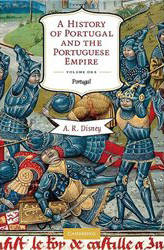 The Kingdom of Portugal was created as a by-product of the Christian reconquest of Hispania. With no geographical reason, and no obvious political roots in its Roman, Germanic, or Islamic pasts, it for long remained a small, struggling realm on Europe's outer fringe. Then, in the early fifteenth century, this unlikely springboard for Western expansion suddenly began to accumulate an empire of its own, eventually extending more than halfway around the globe. The History of Portugal and the Portuguese Empire, drawing particularly on historical scholarship postdating the 1974 Portuguese Revolution, offers a comprehensive overview and reinterpretation of how all this happened - the first such account to appear in English for more than a generation. Volume I concerns the history of Portugal itself from pre-Roman times to the climactic French invasion of 1807; Volume II traces the history of the Portuguese overseas empire.
1899. World's Fleet. Boston Daily Globe
Lloyds Register of Shipping gives the entire fleet of the world as 28,180 steamers and sailing vessels, with a total tonnage of 27,673,628, of which 39 perent are British.
| Great Britain | 10,990 vessels, total tonnage of 10,792,714 |
| United States | 3,010 vessels, total tonnage of 2,405,887 |
| Norway | 2,528 vessels, tonnage of 1,604,230 |
| Germany | 1,676 vessels, with a tonnage of 2,453,334, in which are included her particularly large ships. |
| Sweden | 1,408 vessels with a tonnage of 643, 527 |
| Italy | 1,150 vessels |
| France | 1,182 vessels |
For Historical Comparison
Top 10 Maritime Nations Ranked by Value (2017)
| Country | # of Vessels | Gross Tonnage (m) |
Total Value (USDbn) |
|
|---|---|---|---|---|
| 1 | Greece | 4,453 | 206.47 | $88.0 |
| 2 | Japan | 4,317 | 150.26 | $79.8 |
| 3 | China | 4,938 | 159.71 | $71.7 |
| 4 | USA | 2,399 | 55.92 | $46.5 |
| 5 | Singapore | 2,662 | 64.03 | $41.7 |
| 6 | Norway | 1,668 | 39.68 | $41.1 |
| 7 | Germany | 2,923 | 81.17 | $30.3 |
| 8 | UK | 883 | 28.78 | $24.3 |
| 9 | Denmark | 1,040 | 36.17 | $23.4 |
| 10 | South Korea | 1,484 | 49.88 | $20.1 |
| Total | 26,767 | 87.21 | $466.9 | |

Site Search


Conquerors: How Portugal Forged the First Global Empire
New York Times bestselling author Roger Crowley relates the epic story of the emergence of Portugal, a small, poor nation that enjoyed a century of maritime supremacy thanks to the daring and navigational skill of its explorers -- a tactical advantage no other country could match. Portugal’s discovery of a sea route to India, campaign of imperial conquest over Muslim rulers, and domination of the spice trade would forever disrupt the Mediterranean and build the first global economy.


100 Dogs Who Changed Civilization
100 canines raced ahead of the pack to alter the very course of world history. Inspiring true tales of dogs who've contributed to scientific advancement, influenced geopolitical events, inspired great works of art, and saved the lives of their beloved masters. These astounding canines include: Biche, the Italian Greyhound who started a war between France and Prussia Seaman; the Newfoundland who saved explorers Lewis and Clark from a marauding buffalo; Sergeant Stubby, the most decorated war dog in U.S. history; Laika, the first earthling of any kind to go into orbit; Hachiko, an Akita whose devotion to his dead master made him a Japanese national hero . . . and many more. Hardcover. Black and white illustrations.


The Pirate of the Mediterranean
W. H. G. Kingston


A History of Portugal and the Portuguese Empire
Volume 1. From Beginnings to 1807.
A. R. Disney
The Kingdom of Portugal was created as a by-product of the Christian Reconquest of Hispania. With no geographical raison d'être and no obvious political roots in its Roman, Germanic, or Islamic pasts, it for long remained a small, struggling realm on Europe's outer fringe. Then, in the early fifteenth century, this unlikely springboard for Western expansion suddenly began to accumulate an empire of its own, eventually extending more than halfway around the globe.


Portugal in European and World History
Malyn Newitt.


A Seaman's Book of Sea Stories
C. S. Forester


A History of Portugal and the Portuguese Empire: From Beginnings to 1807
Volume 2
A. R. Disney.


The Pursuit of Power: Technology, Armed Force, and Society since A.D. 1000
William H. McNeill.

 Copyright ~ 1998-2018.