Burma
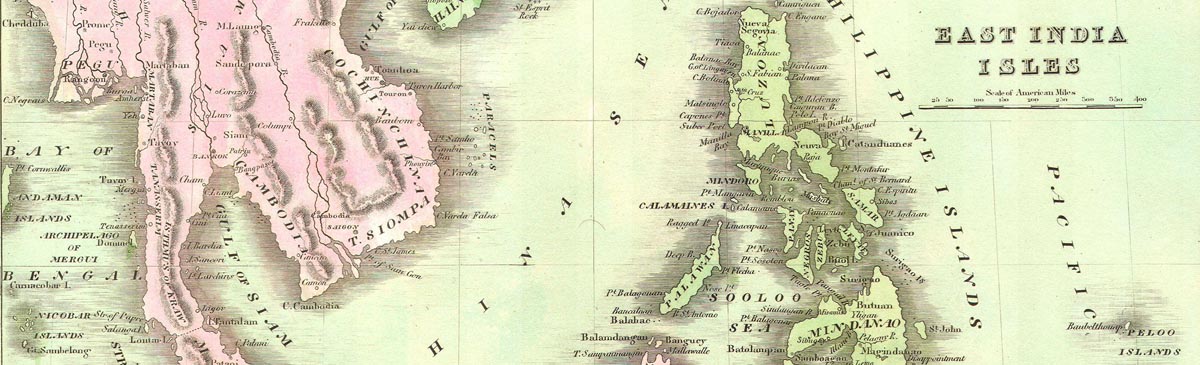
Malay Archipelago (Maritime Southeast Asia): ° Bangladesh ° India ° Indonesia ° Malacca Strait ° Malaysia ° Maldives ° Myanmar (Burma) ° Pakistan ° Philippines ° Riau Islands ° Singapore ° Sri Lanka ° Thailand ° Timor
Myanmar
The Andaman Sea and Sea Gypsies
Once known as Burma, Myanmar was an independent Buddhist kingdom from the 11th to the 13th centuries, when the country fell to Mongol invaders. One hundred years later, it was a satellite of China.


Few regions of the world rival this region with the production of fine gemstones: breathtaking and exquisite rubies, diamonds, sapphires, jadeite and peridot, among many others. Jadeite is found in both rivers and the mountain regions of Burma. (Map: Burma, Asia, East Indies.)
For more than 1,000 years, Burma has been a part of the gem trade, well-known for its wealth in gold and gemstones. Diamonds were regarded as the most sacred elements on earth, and were offered to pagodas. One such offering was to the Shwe Dagon Pagoda, which has a Diamond Orb with a height of 1 foot 10 inches, and a diameter of 31.4 inches. A total 4,351 diamonds are embedded in it, with the total Rati of 2,000. On top of the Orb, a big diamond, weighing 83 Rati is attached.
Shwe Dagon Pagoda


Joseph Tavernier was a rich French explorer and gems merchant who frequented India for trading during the 1600s. In Myanmar, he met Chieftain Mine Hsoe Maha Yaza Sawbwar who was a wealthy man and was known as a collector of precious gems and stones, in the region. During a visit to the Chieftain's palace, Joseph Tavernier was shown one of a precious royal blue diamond from the depository. Joseph was amazed when he saw the blue diamond and started to praise about the beauty and the value of the diamond. Then the Chieftain told him that the stone he had is incomparable to the Blue Diamond embedded on the forehead of the Buddha Image in the Ananda Temple at Bagan. (Image: Shwe Dagon Pagoda.)
Joseph could not resist seeing the diamond and travelled through danger to view the gem. He offered gifts and other offertories to the Myanmar King and started to praise about the Blue Diamond that he had heard about. He told about the dangerous journey he made to Bagan, just to see the priceless stone. The King allowed him to see the diamond at the Ananda Temple and the monks guarding the temple also showed him other jewels. As soon as Joseph saw the Blue Diamond, he became obsessed and planned on stealing it. He asked permission to become a monk as that seemed the easiest way to have access to the stone. Joseph eventually strangled the other two monks and stole the Blue Diamond from the Temple.
The story ends there as the trail weakens.
The British East India Company (EIC) steadily extended its territory in India from early in the 17th century. Bengal, on the east coast of India adjacent to the Burmese kingdom of Ava, was the British stepping stone into India. Calcutta was the capital from which emanated EIC influence, territorial expansion and commercial dealings. Myanmar was primarily seen by the EIC as a buffer zone. It had potential commercial importance but its greater importance was strategic. No other European power could be allowed to gain influence there and the Burmese rulers were expected to acknowledge the superiority of British India and create stable conditions for successful trade.


At the end of the 18th century Myanmar was the strongest state in mainland Southeast Asia. The Chakri dynasty in Thailand was in its infancy, recovering from the Burmese destruction of Ayudhya, and the Vietnamese kingdom was torn by rebellion.
Britain and France vied for Burma, and in the early 1800s, France was in the ascendancy. (Britain, however, eventually triumphed and Burma came under the control of the British Raj of India.) Myanmar teak was thoroughly appreciated by the British. Their interest in it became so much the greater when their own oak forests were depleted as a result of their maritime conflicts with the French. Myanmar teak then came to play a vital part in British shipbuilding. Syriam, Thanlyin and later Rangoon (Yangon) were the British shipbuilding centres in Burma. All British merchant ships which were built at Calcutta that time used Myanmar teak. These were the ships which provisioned expansionist Albion during her naval tussles with the French.


The British impact on Myanmar was profound. At the political level the monarchy was abolished and the Burmese aristocracy were stripped of their power. Myanmar was ruled from Calcutta, as a minor part of the British Indian empire. Indian models of administration were imposed by the British who, by and large, had no understanding of or respect for local social structures. The full force of British political and economic policies were felt in Lower Myanmar.
The British encouraged the settlement of the Myanmar Delta, largely malarial infested jungle and swamps, in the 1850s. Roads and bridges were built, land was opened up at cheap prices with significant tax concessions and the infrastructure of ports and communications was greatly improved to enable crops to be exported to world markets. The result was a dramatic southward migration of Burmese from the dry northern zone to the fertile delta.
The Myanmar Delta became a major producer of rice and little else, commercialised and dependent on the vagaries of international markets. The extent of the transformation can be gauged by the raw economic statistics. In 1855 lower Myanmar exported 162,000 tons of rice: in 1905-6 it exported two million tons, with the price of rice increasing threefold in that time. The area under rice cultivation expanded from around 800,000 acres to around 6 million acres and the population grew from one million in 1852 to four million in 1901.
As Britain increased its presence in Southeast Asia in the 19th century, the Burmese elite proved less able than the Thais to appreciate the threat posed to them and therefore less able to adopt strategies to cope with them.
By 1839, a large blue diamond called the "Hope Diamond," a 45.52 carat grey-blue beauty, had made it through the hands of King Louis XIV of France, Marie Antoinette and then to American heiress Evalyn Walsh McClean among others.
On holiday in Paris in 1911, Evalyn and her husband Ned were at the Hotel Bristol receiving a visit from noted jeweler Pierre Cartier, who carried with him a curious package with a wax seal. Cartier regaled Evalyn with the story of how the former owner of this jewel had died and offered it for sale. Apparently a few months passed before she purchased the Hope Diamond for $180,000.
(A 2008 case involves at least four unsolved murders of Saudi diplomats and millions of dollars worth of missing jewelry whose fates were allegedly linked to a blue diamond. And the Hope Diamond itself rests in the Smithsonian Institution.)
A correspondent having drawn the attention of the Secretary of State for India to the assertions made by a deputation of the Society for the Propagation of the Gospel in Foreign Parts at Oswestry recently, has received the following letter from Lord Kimberley. The statements to which attention was drawn were that after the conquest of Burma the Indian Government introduced its opium traffic there, appointing certain persons in each district as salesmen; that each person was bound to sell a certain quantity under a penalty of ten shillings for each ounce short of the stipulated quantity, and that when an agent found a difficulty in disposing of this quantity to adult persons he sold it to children, and, further, that a prohibitive tax was put on wholesome wine and beer, leaving the only alternative of a fiery spirit distilled from hemp, which English soldiers called "fixed bayonets." Lord Kimberley has replied: "Sir, I am directed by the Secretary of State for India to acknowledge the receipt of your letter, and in reply am directed to say that, so far as Lord Kimbeiley is aware, there is no ground for the statement that the Indian Government after the conquest of Burma appointed opium salesmen in each district and bound them over to sell a certain quantity under a heavy penalty (ten shillings) for each ounce short of the stipulated quantity.
It is quite true that duties are levied on wines and beer; the tax on beer is now a penny per gallon. There is also a duty, which has been enhanced from time to time, on spirits, whether imported or locally distilled. So far as is known, no spirit is distilled in India from hempseed, but other parts of the hemp plant are used in India as a narcotic, and as such are subject to very heavy excise duties. I am, Sir, your obedient servant, ARTHUR GODLEY."

Ranjit Singh was one of the most powerful and charismatic Indian rulers of his age, but has been largely forgotten by recent Western historians. Yet his achievements have had a lasting impact. He unified the warring chiefdoms of the Punjab in a northern Empire of the Sikhs, built up a formidable modern army, kept the British in check to the south, and closed the Khyber Pass through which plunderers had for centuries poured into India. He was also humane and just in his victories, giving employment to defeated foes, and honored religious faiths other than his own. This biography uses a variety of eye-witness accounts from Indian and European sources to chronicle his life and the controversial period of the Anglo-Sikh Wars following his death.


The Clash of Empires in the
Eastern Seas, 1809
Stephen Taylor
The Indian Ocean was the final battleground for Nelson’s navy and France. At stake was Britain’s commercial lifeline to India and its strategic capacity to wage war in Europe. In one fatal season, the natural order of maritime power since Trafalgar was destroyed. In bringing home Bengali saltpeter for the Peninsular campaign with military and civilian passengers, Britain lost fourteen of her great Indiamen, either sunk or taken by enemy frigates. Many hundreds of lives were lost, and the East India Company was shaken to its foundations. The focus of these disasters, military and meteorological, was a tiny French outpost in mid-ocean the island known as Mauritius. This is the story of that season. It brings together the terrifying ordeal of men, women, and children caught at sea in hurricanes, and those who survived to take up the battle to drive the French from the Eastern seas. Mauritius must be taken at any cost.


Site Search
A History of Myanmar Since Ancient Times: Traditions and Transformations


A History of Burma
Columbia University Press
Maung Htin Aung.




Warships of the World to 1900
Lincoln P. Paine.
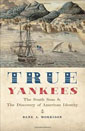
True Yankees: The South Seas and the Discovery of American Identity
(Johns Hopkins University Studies in Historical and Political Science)
Dane A. Morrison
Stephan Talty

Navigation Rules and Regulations Handbook
U.S. Coast Guard
The Navigation Rules & Regulations Handbook supersedes Commandant Instruction M16672.2D This edition includes LNM 39-15 and NTM 41-15 33 CFR 83.01(g) requires: "The operator of each self-propelled vessel 12 meters or more in length shall carry, on board and maintain for ready reference, a copy of these Rules."

American Merchant Ships
1850-1900
Frederick C. Matthews


 Copyright ~ 1998-2018.