News & Tall Tales. 1800s.
Letter from California
Monday, October 28, 1850, The Daily Sanduskian
FROM CALIFORNIA
The following extract from a private letter to one of the editors of the Sanduskian, we think, will be interesting to our readers. It gives a view of California life anything but enlivening to the ardent minds of those afflicted with the gold mania. News that comes by other sources give as deplorable a picture of the state of society as this. Let the California-afflicted read the profit thereby. Be content with what you have or can get by honest industry, and you are rich enough.
Benicia, California, September 12, 1850
My Dear Friend:
This California is certainly a strange land! Nothing genial, nothing noble and generous and good is there to love, to admire, and to imitate. It is all glitter, show, excitement; a striving of each man to outdo his neighbor, to over-reach him, to gain the eclat of having made a "splendid operation." Failures for a million of dollars excite scarcely more interest than elsewhere failures for a million of cents would create. They are not even "seven-day wonders."
Just before the sailing of the last steamer, they got up two quite nice little failures in Sacramento City, one for a little over, and one for a little under a million of dollars. Barton Lee & Co., failed for about $1,100,000, and Warbass & Co. for about $700,000.
San Francisco, determined not to be out done by Sacramento in anything, sends home a "pretty kettle of fish" for the digestion of eastern consignees of merchandise, and the collapsed stomachs of the Wall street sharks. During the past week, there have been several very heavy failures among the most eminent merchants and bankers of San Francisco. A fearful panic is raging, and so fully has the feeling of distrust and insecurity taken possession of the minds of all classes of persons, that many really responsible firms who, under other circumstances would enjoy an unimpaired credit, are suspected, "run" upon, watched, and so crippled by the sudden an unexpected cutting off of their resources that they must go. I refer you to the papers for further particulars, names, etc.
This is the second crisis through which "all hands" have had to "stand by," with sails "shivering in the wind," since last January. The present failures and monetary distress and mainly attributable to the two following causes: First, The universal disappointment, the sickening feeling of "hope deferred," which was felt throughout our STATE when the news arrived by the last two steamers, first of Taylor's death, (whom we have regarded here as our best friend,) and then of the non-admission of California. Secondly, The fact that the location of San Francisco was so unfavorable to the necessities of the commerce concentrated there, that its natural disadvantages had to be overcome by artificial improvements, which have cost more already (though not one-tenth completed), than the merchants there could afford to pay absorbing all of their own profits as well as the profits of their consignors in the Atlantic cities.
You can have no conception of the state of affairs here. Our state is flooded with a large population, daily deriving large accessions from all parts of the world. We have a commerce centering on the Bay of San Francisco rivaling that of any city of our Union, except New York. In the fleet anchored here, waves the flag of every maritime nation, with all of whom our national government has treaties, and to all of whom it is bound to extend its protection within its own ports. Yet we have no courts of admiralty, no courts of competent jurisdiction, nor United States courts of any kind to protect the vital interests of commerce, property, or even liberty and life itself. A sailor cannot be tried for mutiny on the high seas, nor can a brutal ship-master be made responsible for any act of tyranny or cruelty towards his crew. The moment the cargo-laden ship arrives, Jack steps into the "gig," and as he rows merrily ashore snaps his fingers at the powerless captain. In port, the deserter is the best man of the two. Our land titles are also involved in inextricable confusion, growing daily, as transfers multiple, "worse confounded." Hence the difficulties, the fearful riots, the day-light murders of Sacramento City.
In San Francisco all of two-thirds of the waterfronts and business lots, are involved in litigation arising from the conflicting claims of, in some instances, three or four different parties. The consequence has been a depreciation of more than 50 percent in the value of real estate there generally Capitalists will not buy a "pig in a poke," now-a-days. That time has passed in California. It did very well while the "exhilarating gas" of speculative excitement lasted; but the quick-sands have been moving, and the foundations of the superstructure of false prosperity have given way. The whole edifice, glorious and stately as it was to look at, is now falling down, and rattling about our ears, and all this because our home government neglected to send commissioners, when "peace" (what a misnomer, as far as California is concerned!) was first declared, to settle the question of land titles.
In Benicia alone, are we free from these vexatious difficulties elsewhere in our state, lying at the bottom of the insecure operations of those who have had the temerity to risk their hard dollars in uncertain titles, to be confirmed or condemned at some indefinite future period, by some commissioner or court of the laws and rules governing their decisions he is entirely ignorant, having no precedent to enlighten him. The decisions of Florida and Louisiana will, in very few instances, apply to this country as the tenure by which lands are holden is very different.
In Benicia we have had no corrupt alcades to mutilate the records, and to cover prior grants with those of later dates, for the site of the town was part of the private estate of Gen. Vallejo, by special grant from the Mexican Congress, and by the general conveyed to the present proprietors, from whom all titles to individual lots emanate. As each deed must be recorded before it becomes binding or valid, and as the records are always open, there is no clashing, no conflicting of titles. Each man feels secure in the possession of his lot. The natural advantages of this location have, for some months, attracted the attention of sober, thinking men, and the place has been improving, healthily, and now rapidly.
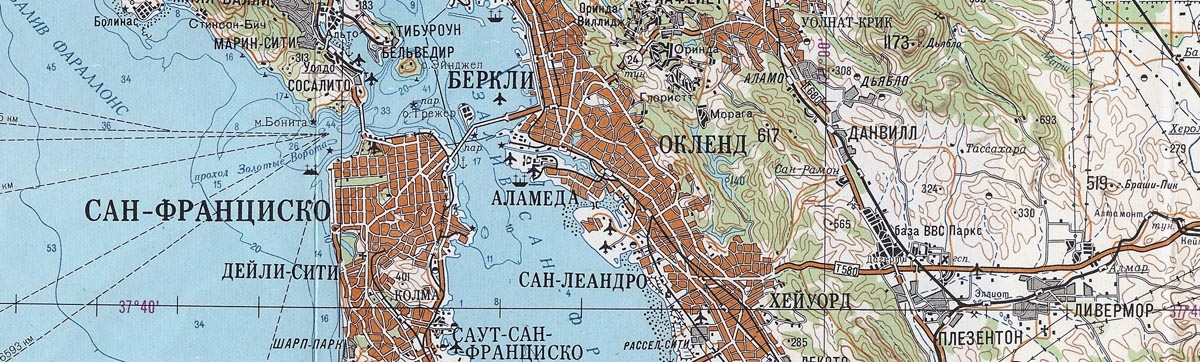
If Congress should make Benicia a port of entry, it will ultimately supercede San Francisco; for it possesses very great natural facilities for the accommodation of commerce, and advantages of location . . . Leaving out of the question the superiority of its climate, I will merely state that the harbor is much more secure and better protected than that of San Francisco, while ships, owing to the depth of the water close alongside of the bank, can discharge from their tackle's end on to the shore, as on the levee at New Orleans, or on the docks at New York. Thus the enormous expenditure of money in the construction of wharves, which in San Francisco, have to be carried over flats two and three thousand feet from the main shore, is here avoided. Ships daily discharge here at one-fifth the cost of discharging in San Francisco, and this difference (at California rates) amounts to something. I refer you to any of the "Maps of the Gold Regions" for a description of the difference between the relative positions of San Francisco and Benicia as regards centrality of location and the comparative facility of communication with the interior from the two places. If you have not a map convenient, I will take a near illustration. Call Erie county California, Marblehead, San Francisco, and Sandusky, Benicia, and you have it exactly except that there should be two magnificent rivers emptying into the "Cove," at the eastern end of the Sandusky and penetrating the whole interior.
The Mammoth Book of Life Before the Mast:
Sailors' Eyewitness Stories from the Age of Fighting Ships
Jon E. Lewis, Editor
Firsthand accounts of the real-life naval adventures behind the popular historical sagas of Patrick O'Brian and C. F. Forester. Twenty true-life adventures capture the glory and gore of the great age of naval warfare from the late eighteenth to the early nineteenth century -- the age of the French Revolutionary War, the Napoleonic Wars, and the War of 1812 -- when combat at sea was won by sheer human wit, courage, and endurance. Culled from memoirs, diaries, and letters of celebrated officers as well as sailors, the collection includes accounts of such decisive naval engagements as Admiral Horatio Nelson's on the Battle of the Nile in 1798 or Midshipman Roberts' on the Battle of Trafalgar in 1805 and also offers glimpses into daily hardships aboard a man-of-war: scurvy, whippings, storms, piracy, press gangs, drudgery, boredom, and cannibalism.
Life of a Sailor (Seafarers' Voices)
Frederick Chamier
Chamier went to sea in 1809 as an officer in the Royal Navy. Like his contemporary, Captain Frederick Marryat, he enjoyed a successful literary career and is remembered for his naval novels. This book, his first, is usually catalogued as fiction, although it is an exact account of his naval experiences, with every individual, ship, and event he described corroborated by his service records. Told with humor and insight, it is considered an authentic account of a young officer's service. From anti-slavery patrols off Africa to punitive raids on the American coast during the War of 1812, Chamier provides details of many lesser-known campaigns. His descriptions of British naval operations in America, which reflected his objection to bringing the war to the civilian population, were highly criticized by his seniors.


The Nagle Journal: A Diary of the Life of Jacob Nagle, Sailor, 1775 to 1841
John C. Dann
Great Stories of the Sea & Ships
N. C. Wyeth


 Copyright ~ 1998-2018.