Passengers Arriving in the Port of San Francisco
Crossing Nicaragua
January 15, 1852, Daily Alta California, San Francisco
A Card.
We, the undersigned, having shipped on board the North America at San Francisco for New York, in the Vanderbilt line, feel impelled by a sense of duty we owe to ourselves and the traveling community, to and from California, to give our experience, and treatment from those who have charge of said line.
|
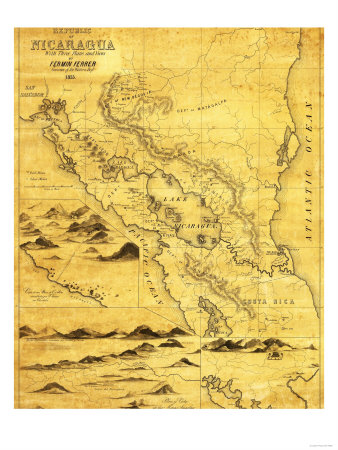
In the first place, we were informed, by Vandewater, the agent of the line at San Francisco, that we would be put through to said line in twenty-two or three days - that there was a good road across the Isthmus - that we could cross the Isthmus in two or three days - that everything was arranged and a good road. On our arrival at San Juan del Sud, we found the roads almost impassable, and no adequate means in the control of said company to put us across the Isthmus. Their agents in San Juan told us mules would be sufficient to carry us across, and our baggage, in a day or two; in consequence of which, we purchased through tickets from San Juan del Sud to New York, and paid them for the passage, and took tickets through for the Isthmus and Atlantic.
We stopped at San Juan three or four days for the expected mules of the company, and were compelled to make the best of our way across the Isthmus, being again in the foils of the serpent. The agents told us to go to Rives, instead of Virgin Bay, as provisions were scarce at the Bay, and stop for the steamer on the lake. We will not describe the scene across the Isthmus. Suffice it to say, that ladies, who shipped on the Promethus at New York for San Juan del Norte, on their arrival, were put astride of mules, without protection - obliged to lie out on the land in drenching rains - lost their way - had their mules stolen from them, and were left to make their way to Del Sud, either on foot the mud being from two to four feet deep, or purchased mules, and pay from twenty to thirty-five dollars - that they were detained from two to three weeks in crossing, and the company would not, when requested, refund their money, or pay them for detention.
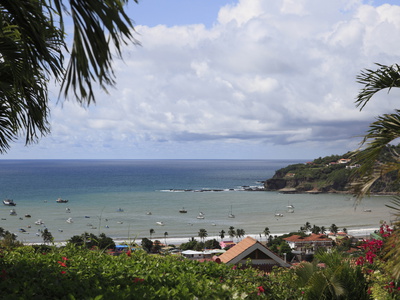
We stopped at Rives from five to six days, the boat on the lake having been due at Virgin Bay four or five days. News then came that the steamer had gone over the falls and we must make the best of our way across the lake and down the river, a distance of two hundred miles. We chartered some sloops - some bungays - and started at the imminent danger of our lives. We crossed the lake in a bungay - a heavy blow cam eon, and we expected, for six or eight hours, to be engulfed in the lake. But, thanks to an overruling Providence, we at least got across, after a journey of five days, to Don Carlos. We then started down the river, and we were compelled to row all night, and we got to Gray Town in some thirty-six hours.
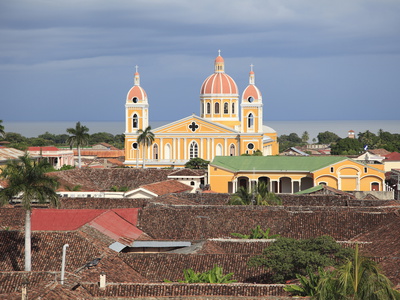
When we arrived there, we found to our surprise, the Webster had sailed for New York, taking those who had come down in sailing vessels, and leaving us, who had come through in their line, to remain at Gray Town , that knowing how long, or take our chance of a passage to the first steamer that came in. The Brother Jonathan was daily expected from Chagres, land the agent at Gray Town told us he would endeavor to transfer us to the Jonathan when the Jonathan arrived. They refused the transfer, and we were obliged either to remain there during the prevalence of an epidemic, or pay our passage again on board the Jonathan - the last of which we resolved upon.
|
We will not describe our situation on board of the boat, which crossed the Atlantic a moving pestilence, whose putrid carcass was strewn with the dead and the dying during the passage, and we happen to be spared, as monuments of God's mercy, to tell the tale. On our arrival at New York, we called upon Mr. Lea, the Secretary of the Transit Company across the Isthmus, to refund us our money. He informed us that he was not authorized to do so, and had nothing to do with the ocean steamers; but that they (the Directors) would hold a meeting and decide upon the matter next day, but that we must call at Vanderbilt's office for the money we had paid for the Atlantic. We called at the office, and stated our grievance, and asked, for the sake of adjusting the matter, that they would pay us back the money we paid for our passage, and we would lose our time and expense, which had already amounted to a large sum, and the hopeful son-in-law of the philanthropic Vanderbilt had the audacity to offer us a boon of $25 for $80 paid for passages an no indemnity, thereby adding insult to injury; and in justice to the Transit Company, they resolved, on their part, to refund us $10, for transit across the Isthmus, a part of us having received checks for the amount, and the balance being refused by the Vanderbilt Company.
This is but a faint outline; and if provoked, further disclosures will be made with reference to said route. We were forty-five days from San Francisco to New York. And we here invoke the traveling community, if they value comfort, health, convenience and life, touch not this unclean thing, but deal with honorable men, who, if you are detained, will indemnity you, as they have heretofore done, by paying you a reasonable amount.
Done at the Mercantile Hotel, Saturday, November 29, 1851.
Jacob Hoage, Pennsylvania
Thomas A. Robinson, Philadelphia
William H. Kirkhoff
Thomas Young, St. Charles, Illinois
Daniel J. Van Aickin, Auburn, New York
Charles L. Henderson, M.D., Grand Rapids, Kent County, Michigan
John Gain, Westchester, New York
A. Johnson, Paterson, New Jersey
E.P. Abel, Delaware County, New York
A.B. Grant, Hobart, Delaware County, New York
Note.-Indisputable reference can be given, in the city and county, where the above signers reside, if requisite.
|

Site Search

Panama Fever: The Epic Story of One of the Greatest Human Achievements of All Time-- the Building of the Panama Canal
Dr. Matthew Parker


The Big Ditch: How America Took, Built, Ran, and Ultimately Gave Away the Panama Canal
Noel Maurer


The Building of the Panama Canal in Historic Photographs
Ulrich Keller

Gold, Silk, Pioneers & Mail: The Story of the Pacific Mail Steamship Company
Robert J. Chandler with Stephen J. Potash, Foreword by James P. Delgado, Ph.D.
The Path Between the Seas:
The Creation of the Panama Canal, 1870-1914 
David McCullough
Winner: National Book Award
From the book cover: "Mr. McCullough is a storyteller with the capacity to steer readers through political, financial, and engineerign intricacies without fatique or muddle. This is a great-scale work.
~Newsweek
Simon & Schuster, 1977
Memories of a Future Home: Diasporic Citizenship of Chinese in Panama
Lok Siu


The Building of the Panama Canal in Historic Photographs
Ulrich Keller

The Panama Canal: A History of One of the Most Difficult Engineering Projects Ever
James K. Wheaton


The Canal Builders:
Making America's Empire at the Panama Canal
(Penguin History of American Life)
Julie Greene

The Buccaneers of America 
Alexandre Olivier Exquemelin
Exquemelin, whose origins (probably French) remain unclear, was on board the ship of the pirate captain Henry Morgan during his raid on Panama City in 1671. Exquemelin's association with the buccaneers began around 1669, when he was sold from his indentured servitude with the French West India Company to a barber-surgeon who taught him the trade. His subsequent years as a surgeon on board pirate ships led to the publication of "The Buccaneers of America" in 1678. This portrait of the seventeenth century sea-rovers, since revealed to contain several errors and exaggerations, includes Exquemelin's sensationalized accounts of international criminals who performed inhuman acts of cruelty. The story, originally published in Dutch, was translated into several languages. The original text has attained notoriety as an extraordinary source of information about the legendary pirates, despite Henry Morgan's claims of slander and libel against the publishers, who were later court-ordered to revise future editions.
Captain James H. Blethen,
Master Mariner
(The Maritime Heritage Project)


 Copyright ~ 1998-2018.