Sea Captains: San Francisco 1800s
Captain J. H. Trask
February 6, 1932, Oakland Tribune, Oakland, California
The arrival of the Mariposa in California waters was a notable occasion for its skipper, the veteran Captain J. H. Trask. It marked the 50th anniversary of a career as a mariner. "When I came here for the first time in 1894," said Captain Trask, "we had to anchor miles from here."
As chief officer of the Sierra, a liner making her maiden voyage in the Australia service, Captain Trask first came to this coast in 1899. He had shipped out of Boston on a 400-ton West Indian barkentine in 1882 and recalls rough weather off Cape Hatteras.
He first gained fame in January 1894 when, as skipper of the Glasgow square rigger Port Douglas, he rescued in a gale the captain and 29 men of the British ship Oronay, sinking in mid-Atlantic.
His first command was the American ship Salaria.
Only recently he went over the side of the Sierra in mid-Pacific and dived under the stern of his ship to remove a line fouling her propeller.


Robert Stanley Bates, George Marsh (Editor), John F. Whiteley (Forward)
(Batek Marine Publishing, 2011; Nominated in 2012 for a Pulitzer Prize)

This book depicts important aspects of our maritime history never before addressed. This synthesis of key elements of our rich maritime history might never have occurred without the many years of original research done by the author, Commodore Bates, the holder of an unlimited master's license who has enjoyed a distinguished fifty-year career in both the Coast Guard and the American Merchant Marine.


Charles Tyng
Tyng (1801-1879), who rose from cabin boy to captain and prosperous merchant, wrote this account of his early sailing days in later life. In 1996, this memoir was found by his great-great-granddaughter, Susan Fels, who edited the 419-page handwritten manuscript. An unruly boy sent to live in various homes by his rather forbidding father, Tyng first shipped on a merchant vessel at the age of 13. He hated it. But he loved his second voyage and soon became one of the youngest captains in the American merchant fleet. As Tyng tells of voyages around the world carrying cargoes of bullion, tea, linseed oil, molasses and other items to Holland, China, Cuba and other destinations, he writes with understatement, modesty and a deadpan humor that might or might not be intentional.
Tales of the Seven Seas:
The Escapades of Captain Dynamite Johnny O'Brien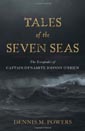

Captain Dynamite Johnny O'Brien sailed the seven seas for over sixty years, starting in the late 1860s in India and ending in 1930 on the U.S. West Coast. He sailed every type of ship imaginable, but this book is more than the story of Captain O'Brien's incredible feats. Tales of the Seven Seas is about sailing where danger and adventure coexists on a daily basis. Smell the salt in the air and hear the ocean's rush as a ship plows its way through heavy seas with hardened men, leaking seams, and shrieking winds. These true stories are about tough times and courageous men in distant places, from the Hawaiian Islands to the Bering Sea, from the waning days of sail to the age of steamships.
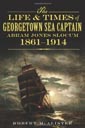

Robert McAlister
Born at sea on his father's whaling ship in 1861, Captain Slocum learned the seafaring life in New Bedford, Massachusetts as part of the last generation of iron men aboard commercial wooden sailing ships in the Atlantic. His voyages often took him around Cape Hatteras to Georgetown, South Carolina, to load lumber bound for northern cities. He sailed in all seasons, through storms and hurricanes, for twenty years as captain of two schooners, the Warren B. Potter and the City of Georgetown. He was respected in Georgetown, where he wooed his wife. His ship sank in a collision with an ocean liner in 1913, but he survived, only to be lost at sea a year later as captain of another schooner.
The Sea Chart: The Illustrated History of Nautical Maps and Navigational Charts
John Blake
The sea chart was one of the key tools by which ships of trade, transport and conquest navigated their course across the oceans. John Blake looks at the history and development of the chart and the related nautical map, in both scientific and aesthetic terms, as a means of safe and accurate seaborne navigation. This handsome work contains 150 color illustrations including the earliest charts of the Mediterranean made by thirteenth-century Italian merchant adventurers, as well as eighteenth-century charts that became strategic naval and commercial requirements and led to Cook's voyages in the Pacific, the search for the Northwest Passage, and races to the Arctic and Antarctic.


The Rebel Raiders
The Astonishing History of the Confederacy's Secret Navy
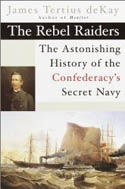
James T. deKay
During its construction in Liverpool, the ship was known as Number 290. When it was finally unleashed as the CSS Alabama, the Confederate gunship triggered the last great military campaign of the Civil War; yet another infamous example of British political treachery; and the largest retribution settlement ever negotiated by an international tribunal: $15,500,000 in gold paid by Britain to the United States. This riveting true story of the Anglo-Confederate alliance that led to the creation of a Southern navy illuminates the dramatic and crucial global impact of the American Civil War. Like most things in the War between the States, it started over cotton: Lincoln's naval blockade prevented the South from exporting their prize commodity to England. In response, the Confederacy came up with a plan to divert the North's vessels and open the waterways, a plan that would mean covertly building a navy in Britain with a cast of clandestine characters.


Donald Johnson and Juha Nurminen
Royal prestige, intellectual curiosity, and territorial expansion all propelled mankind to undertake perilous voyages across unpredictable oceans. This large and lavishly illustrated volume brings that history to life. From the early Phoenician navigation techniques to the technologies behind today's mega-ships, the greatest advances in shipbuilding are covered, accompanied by hundreds of images, with an in-depth look at navigational instruments (including those used by the Vikings).
Robert Stanley Bates, George Marsh (Editor), John F. Whiteley (Forward) (Batek Marine Publishing, 2011; Nominated in 2012 for a Pulitzer Prize)
This book depicts important aspects of our maritime history as a result of original research done by the author, Commodore Bates, the holder of an unlimited master's license who has enjoyed a distinguished fifty-year career in both the Coast Guard and the American Merchant Marine.
The U.S. Coast Guard issues all Captain Licenses for U.S. Ports.
Note: Other countries have different regulations, i.e. the RYA (Royal Yachting Association), conducts certification for Britain and Ireland. As of 2011, they did not recognize the USCG certification; certification through their courses was required.Master Unlimited is a licensed mariner in ultimate command of a vessel any gross tons. The captain is responsible for its safe and efficient operation, including cargo operations, navigation, crew management and ensuring that the vessel complies with local and international laws. All persons on board, including officers and crew, other shipboard staff members, passengers, guests and pilots, are under the captain's authority and are his or her ultimate responsibility. The STCW defines the Master as Person having command of the ship.
The Sea Chart
The Illustrated History of Nautical Maps and Navigational Charts
John Blake
The sea chart was one of the key tools by which ships of trade, transport and conquest navigated their course across the oceans. Herein is a history and development of the chart and the related nautical map, in both scientific and aesthetic terms, as a means of safe and accurate seaborne navigation. 150 color illustrations including the earliest charts of the Mediterranean made by 13th-century Italian merchant adventurers, as well as 18th-century charts that became strategic naval and commercial requirements and led to Cook's voyages in the Pacific, the search for the Northwest Passage, and races to the Arctic and Antarctic.
Get Your Captain's License. Fifth Edition 
Charlie Wing
Considered the quickest, easiest, and least expensive way to prepare for the U.S. Coast Guard captain's ratings exams required for anyone who takes paying passengers on a boat, and useful for serious boaters who want to save money on insurance. 350 pages of seamanship and navigation tutorials. More than 1,500 questions and answers from the Coast Guard exams. Includes an interactive CD-ROM with all 14,000 questions and answers in the USCG database, so you can take an unlimited number of practice exams

Site Search


Warships of the World to 1900
Lincoln P. Paine.
True Yankees: The South Seas and the Discovery of American Identity
(Johns Hopkins University Studies in Historical and Political Science)
Dane A. Morrison
Stephan Talty

Navigation Rules and Regulations Handbook
U.S. Coast Guard
The Navigation Rules & Regulations Handbook supersedes Commandant Instruction M16672.2D This edition includes LNM 39-15 and NTM 41-15 33 CFR 83.01(g) requires: "The operator of each self-propelled vessel 12 meters or more in length shall carry, on board and maintain for ready reference, a copy of these Rules."

American Merchant Ships
1850-1900
Frederick C. Matthews

 Copyright ~ 1998-2018.